Dive Watches and Underwater Technologies: A Guide to the Depths
The key to safely exploring the fascinating underwater world lies in the technology on your wrist. We examine the evolution of underwater timekeeping from mechanical classics to advanced dive computers.
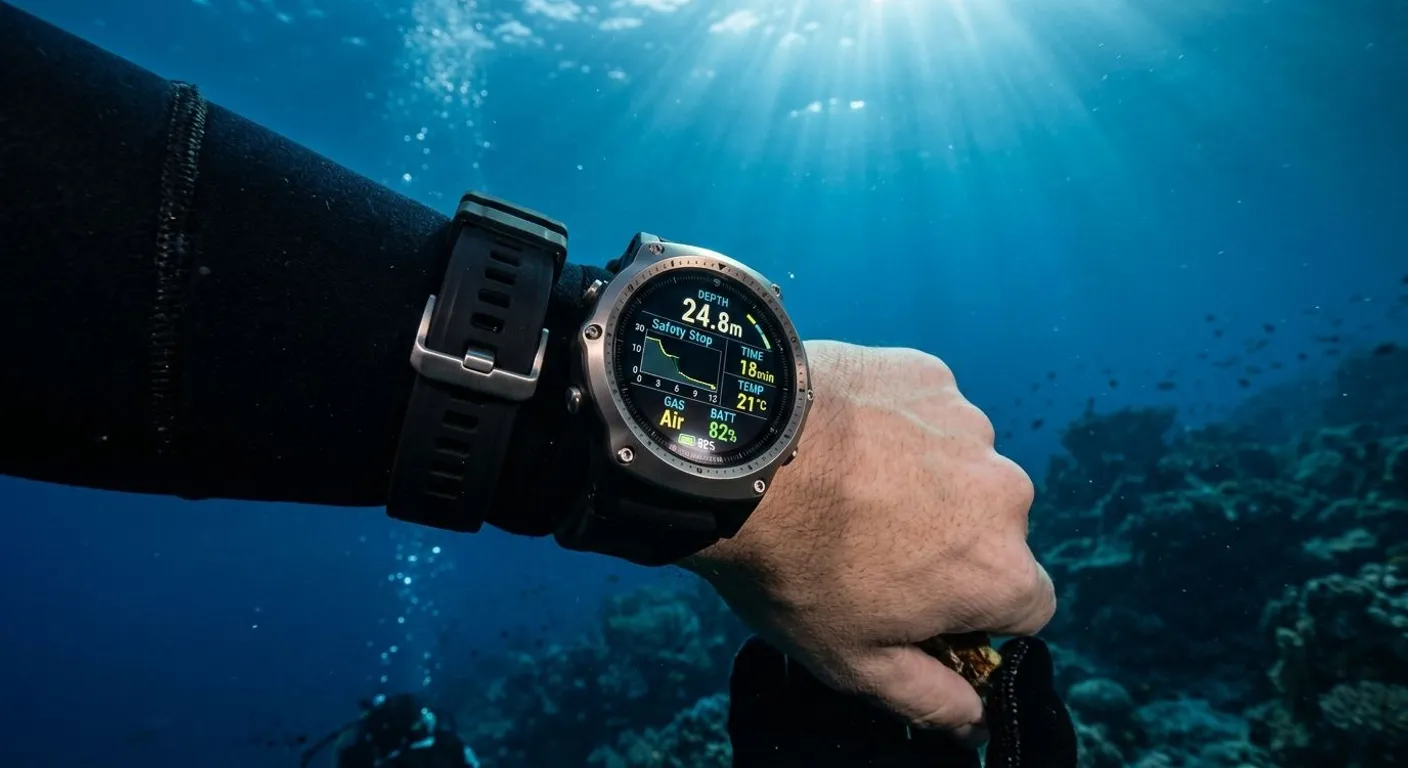
The depths of the ocean offer an environment that is both mesmerizing and unforgiving to human life. Submerging underwater brings increased pressure, diminishing light, and a limited oxygen supply, transforming time tracking from a simple measurement into a vital safety factor. Historically the safeguard of sponge divers and military frogmen, mechanical watches with rotating bezels have today evolved into underwater computers running complex algorithms and equipped with in-body sensors.
Underwater technology enables divers to return safely to the surface by calculating not only depth, but also real-time nitrogen absorption in the blood. Whether you aim for a recreational bottom dive or a professional technical dive, understanding the working principles of the technology on your wrist directly impacts your underwater experience.
ISO 6425 Standard: Criteria Defining a True Dive Watch
Not every watch sold on the market with a "water resistant" label is suitable for deep diving conditions. A true dive watch must meet the ISO 6425 standards established by the International Organization for Standardization. This standard certifies not only the device's water pressure resistance, but also its performance under harsh environmental conditions.
The essential features required in an ISO 6425-certified dive watch include:
- Unidirectional Rotating Bezel: Rotating only counterclockwise, this outer ring prevents the diver from accidentally extending their bottom time. Even if accidentally bumped, the bezel will not increase the displayed time; instead, it shows a shorter elapsed time, keeping you safe.
- High Legibility: In pitch-black underwater environments, the hour, minute, and second hands must be clearly readable from a distance of 25 centimeters. For this purpose, advanced phosphorescent coatings such as LumiBrite or Super-LumiNova are used.
- Saltwater and Magnetic Resistance: After exposure to highly saline seawater, the watch must not corrode and must be protected against magnetic field interference.
- Minimum 100-Meter Pressure Resistance: As required by certification, the watch is tested at a pressure at least 25% higher than the stated depth rating (for example, tested to 250m for a 200m rating).
- Helium Escape Valve: A special mechanical system designed for deep saturation diving that prevents helium gas from seeping into the watch case and popping off the crystal.
From Mechanical Classics to Smart Dive Computers
In the past, divers relied on mechanical dive watches to measure bottom time and manually calculated decompression stops using dive tables (such as US Navy Tables). Today, these complex processes are managed in real time by smart dive computers. A similar technological transformation is also occurring in wearable technology trends for cyclists, where athletes' vital metrics are processed instantaneously via wearable devices.
Modern dive computers integrate piezoresistive pressure sensors, water temperature gauges, and digital compasses into a single compact housing. This data is equally critical for freedivers. For more information on breath control and depth tracking, you can check out our freediving guide.
Innovations Revolutionizing Underwater Technology
In recent years, advancements in microelectronics and material science have unlocked a new era in underwater tech. Advanced watches are no longer mere timekeeping devices, but underwater life-support assistants.
1. Bühlmann ZHL-16C Decompression Algorithm
Modern smart dive watches utilize algorithms developed by Austrian scientist Albert A. Bühlmann. Simulating nitrogen absorption and elimination across 16 theoretical tissue compartments, this model calculates safety stops and decompression times with millisecond precision based on the diver's real-time depth.
2. Sonar-Based Acoustic Air Integration
While radio waves attenuate rapidly in water, acoustic waves transmit remarkably well underwater. New-generation wireless tank transmitters send tank air pressure directly to your wrist watch via acoustic sonar signals. This allows you to monitor remaining air pressure and see instantly how many minutes of bottom time remain at your current breathing rate.
3. Color AMOLED and MIP Display Technologies
High-resolution MIP (Memory-in-Pixel) displays offer excellent visibility in direct sunlight while keeping battery consumption to a minimum. Designed for deep and murky waters, AMOLED displays feature high contrast ratios to display underwater maps and critical alerts with exceptional clarity.
4. Surface GPS and Location Logging
GPS signals cannot penetrate more than a few centimeters below the water's surface. However, advanced dive watches instantly acquire your surface entry and exit coordinates. Post-dive, they transfer your route to your smartphone, enabling you to build detailed dive logs. For similar solutions regarding the importance of location tracking in outdoor sports, take a look at our guide on smart wristbands for hiking.
Comparison: Types of Diving Equipment
In the table below, you can compare the prominent features of different time-tracking and control tools used underwater:
| Feature | Mechanical Dive Watch | Standard Dive Computer | Smart Dive Watch (Smartwatch) |
|---|---|---|---|
| Primary Function | Bottom time tracking | Decompression & depth calculation | Multisport, diving, biometric tracking |
| Air Tracking | None (Requires external pressure gauge) | Cabled or wireless transmitter | Acoustic sonar transmitter |
| Battery Life | Automatic/Hand-wind (No battery) | 1–3 Years (User-replaceable) | 10–30 Days (Rechargeable) |
| Algorithm | None (Tables mandatory) | Bühlmann / RGBM | Advanced Bühlmann ZHL-16C |
| Everyday Use | Classic and stylish urban wear | Diving only | All-day health and fitness tracking |
Deep Safety: Preventing Decompression Sickness
The single greatest contribution of underwater technologies is minimizing the risk of decompression sickness (DCS), commonly known as "the bends." As depth increases, nitrogen in the breathing gas dissolves into the blood and tissues due to high ambient pressure. Ascending too quickly causes this nitrogen to form bubbles in the bloodstream. Smart dive watches feature Ascent Rate Warnings that prevent you from ascending faster than 9–10 meters per minute, alerting you with vibrating and audible alarms.
Key Considerations When Choosing the Right Dive Watch
- Diving Style: If you only engage in recreational diving down to 18 meters a few times a year, an entry-level dive computer is sufficient. If you plan to conduct technical dives using Nitrox or Trimix gas mixtures, you should look into multi-gas capable devices.
- Display Legibility: Ensure that backlight or screen brightness is adequate for murky water conditions or night diving.
- Servicing and Battery Replacement: It is vital that sealing gaskets undergo pressure testing at an authorized service center following battery replacements.
Resources
Frequently Asked Questions
Can you dive with a 100m Water Resistant watch?
No. Static water resistance ratings and dynamic diving pressures are different. To dive, the watch must be an ISO 6425-certified true Diver's Watch or a dive computer.
Can decompression diving be done without a dive computer?
For dives performed without a dive computer, using standard dive tables and a precise depth gauge/bottom timer is essential. However, using a dive computer eliminates human calculation errors.
What happens if a smart dive watch battery dies underwater?
Modern devices warn the diver at critical battery levels and switch to power-saving mode. Nevertheless, as a safety rule, every technical diver should carry a backup timer/depth gauge (bottom timer).
Is a standard dive watch sufficient for Nitrox diving?
No. Since Nitrox (enriched air) diving involves an oxygen percentage higher than 21%, the device must have software capable of calculating oxygen percentage and the maximum operating depth (MOD) for oxygen toxicity.
This content was researched and prepared by the İlgi Alanları editorial team and reviewed for accuracy and readability before publication. Information on health, finance and investment topics is general in nature and does not replace professional advice.