Home Bodyweight Workout Program and Progression Guide
It is possible to get stronger and burn fat using only your body weight without going to the gym. Here is a complete workout program and progression strategies you can easily follow at home.
You can achieve a strong, flexible, and athletic physique without weight plates, dumbbells, or complex fitness machines. Bodyweight training (calisthenics) is one of the most effective ways to trigger muscle fibers to the maximum using your own mass against gravity. A proper program you can follow in the comfort of your home saves time while helping you build a sustainable exercise habit.
The biggest advantage of working out without equipment is that the movements are functional. These exercises, which mimic daily pushing, pulling, squatting, and standing mechanisms, keep the core constantly active while protecting joint health.
Progression Logic in Bodyweight Exercises
The fundamental rule of muscle growth is the principle of progressive overload. In weight training, you increase resistance by adding plates to a barbell. However, when working with body weight, increasing resistance requires a more creative approach:
- Changing the Leverage: Performing push-ups with your feet elevated (decline push-up) increases the load on the chest and shoulder muscles.
- Controlling Movement Tempo: Instead of completing the movement quickly, you can extend the time under tension (TUT) by spreading the eccentric (lengthening) phase over 3-4 seconds.
- Unilateral Training: Performing a Bulgarian split squat on one leg instead of a two-legged squat doubles the load on the target muscle.
- Increasing the Range of Motion: A full-depth squat engages significantly more muscle fibers compared to a half squat.
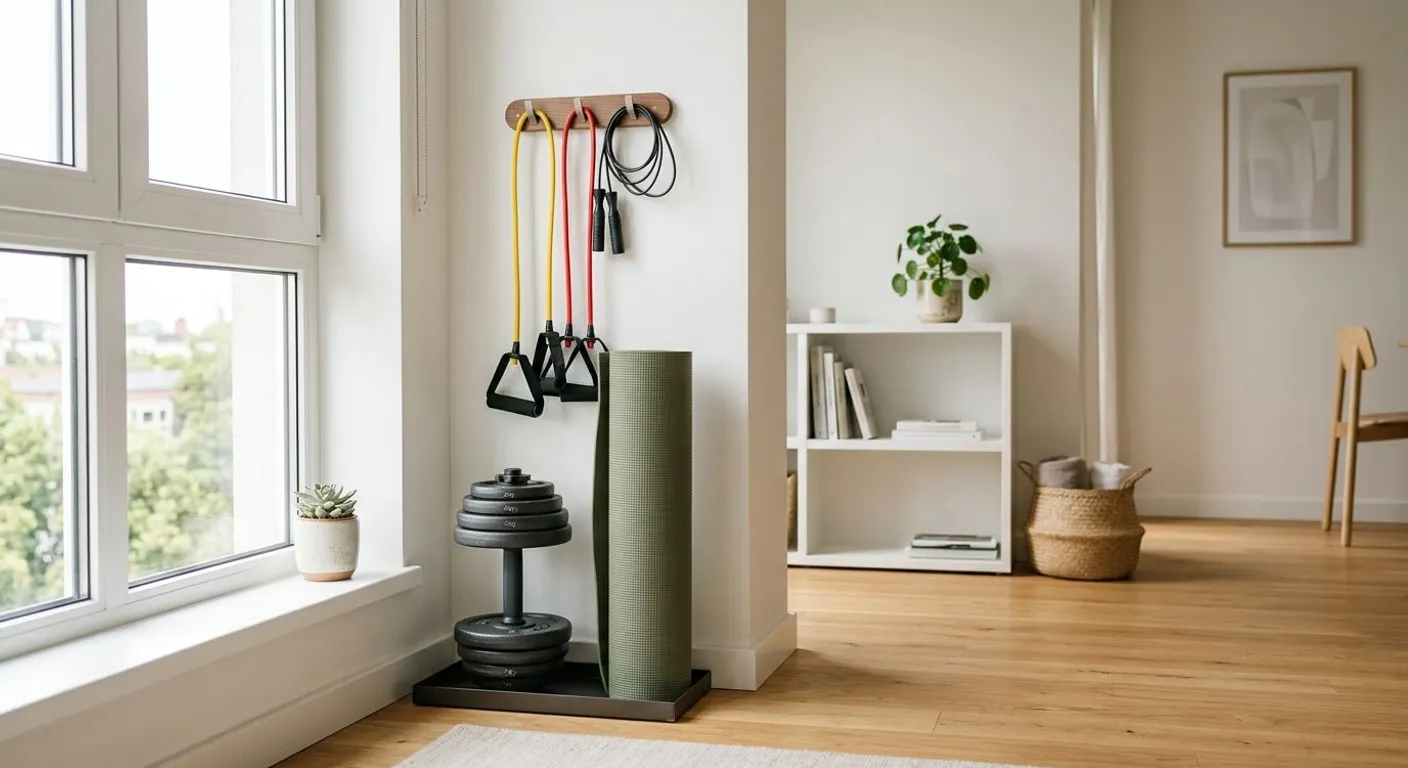
To diversify your home workout routine and enhance your training quality, you can check out our guide on compact equipment recommendations for home workouts.
Basic Movement Categories and Proper Form
For balanced body development, your workout program should equally include push, pull, lower body, and core exercises.
1. Push Movements
Push exercises target the chest, front shoulders, and triceps.
- Standard Push-up: The body should form a straight line from head to heels. Elbows should be at a 45-degree angle to the torso, not flaring out like wings.
- Knee Push-up: An excellent alternative for beginners to reduce the load.
- Pike Push-up: Assume a "V" position by lifting your hips up. Lower your head forward between your hands to target shoulder muscles.
2. Pull Movements
Working the back and biceps is the most neglected part in a home environment. However, targeting back muscles with proper techniques is quite straightforward.
- Inverted Row (Under the Table): Position yourself under a sturdy table, grip the edge, and pull your chest toward the table.
- Door or Towel Pull: Lean your torso back and pull yourself up using a towel wrapped around a doorknob or a solid anchor point.
- Superman Hold: Lying face down, lift your arms and legs simultaneously to isometrically contract the lower and upper back.
3. Lower Body (Legs) Movements
Leg muscles are the largest muscle group in the body and provide high calorie burn.
- Bodyweight Squat: Stand with feet shoulder-width apart, chest upright, and squat down by pushing your hips back. Ensure knees do not cave inward.
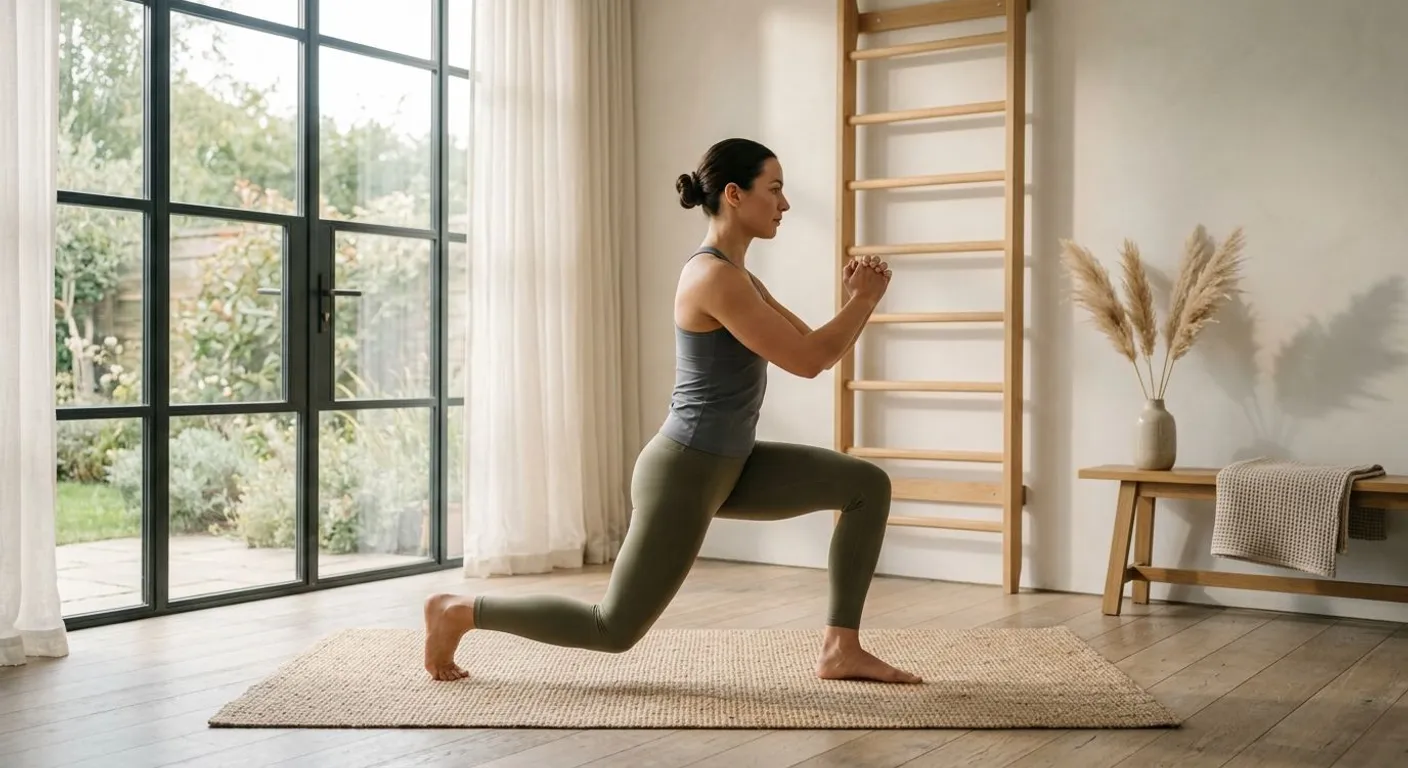
- Lunge: Take a wide step forward or backward and bend both knees to 90 degrees. Preventing the front knee from excessively passing the toes ensures balanced load distribution.
- Glute Bridge: Lie on your back with knees bent, raise your hips, and squeeze your glutes at the top for 2 seconds.
4. Core Region
A strong core minimizes the risk of injury across all movements.
- Plank: Support yourself on elbows and toes while fully bracing your abdominal and gluteal muscles. Do not let your lower back sag.
- Hollow Body Hold: Lying on your back, press your lower back completely into the floor, raise your arms and legs slightly, and hold statically.
Comparison of Beginner and Intermediate Workout Programs
The table below will help you choose the appropriate workout structure for your level:
| Parameter | Beginner Level | Intermediate Level |
|---|---|---|
| Weekly Frequency | 3 Days (Mon - Wed - Fri) | 4 Days (Upper / Lower Body Split) |
| Workout Type | Full Body | Split (Push-Pull-Legs or Upper/Lower) |
| Number of Sets | 2-3 Sets per exercise | 3-4 Sets per exercise |
| Repetition Range | 8 - 12 Reps | 12 - 20 Reps or Timed Sets |
| Rest Duration | 60-90 seconds between sets | 45-60 seconds between sets |
| Focus Area | Learning form and neuromuscular adaptation | Muscle hypertrophy and conditioning |
Sample Weekly Full-Body Routine
You can follow this program 3 days a week, with at least one rest day in between (e.g., Monday, Wednesday, Friday).
Warm-Up (5-7 Minutes)
Before starting the workout, it is essential to secrete joint fluids and gradually increase your heart rate.
- Arm Circles: 30 seconds forward, 30 seconds backward.
- Hip Openers: 10 reps in each direction.
- Jumping Jacks: 45 seconds.
- Bodyweight Squat (Slow tempo): 10 reps.
If you want to increase your overall cardiovascular capacity, you can incorporate methods from our guide on stamina building techniques with walking into your non-workout rest days.
Main Exercise Block
- Squat: 3 Sets x 12-15 Reps (Rest: 60 sec)
- Push-up (or Knee Push-up): 3 Sets x 8-12 Reps (Rest: 60 sec)
- Bulgarian Split Squat: 3 Sets x 10 Reps (Each leg, Rest: 60 sec)
- Inverted Row (Under Table): 3 Sets x 8-10 Reps (Rest: 60 sec)
- Glute Bridge: 3 Sets x 15 Reps (Rest: 45 sec)
- Plank: 3 Sets x 30-45 Seconds (Rest: 45 sec)
Cool-Down and Stretching (5 Minutes)
Passive stretching should be performed post-workout to lengthen muscle fibers and reduce lactic acid accumulation. Hold positions like Child's Pose, cobra stretch, and hamstring stretches for 20-30 seconds each.
Tracking Workout Progress and Recovery
Muscle growth occurs during the post-workout rest and nutrition phase, not during the workout itself. High-intensity bodyweight workouts at home also cause microscopic muscle tears.
Pay attention to the following steps to boost progress and manage muscle soreness:
- Protein and Fluid Intake: Consuming approximately 1.4 to 2.0 grams of protein per kilogram of body weight accelerates muscle repair. Adequate water intake is essential for proper muscle function.
- Sleep Quality: Growth hormone reaches its peak release during deep sleep. Aim for 7-8 hours of quality sleep every night.
- Recovery Techniques: By utilizing post-workout recovery methods to relieve muscle tightness after intense training sessions, you can enter your next workout much better prepared.
- Keeping a Workout Log: Note down how many reps and sets you complete in each session. Increasing total reps by even just 1 the following week signals a stimulus for growth to your body.
Working out with your own body weight is not a temporary solution; it is one of the most practical and liberating fitness disciplines you can maintain for life. With a disciplined approach, you will clearly notice strength gains and physical toning within a few weeks.
References
Frequently Asked Questions
Is it possible to gain muscle mass using only body weight?
Yes, it is possible. Muscles do not differentiate whether the resistance comes from a dumbbell or your own body; they simply respond to the mechanical tension placed upon them. You can build muscle mass by applying progressive overload principles.
How many days a week should home bodyweight workouts be done?
For beginners and intermediate individuals, working out 3 or 4 days a week is ideal. At least one rest day should be taken between workout days to allow muscles to recover.
How do you target back muscles in bodyweight workouts?
Back muscles can be effectively worked using inverted rows under a sturdy table, towel pulls anchored behind a door, and the prone Superman exercise.
What should I eat before a workout?
Consuming easily digestible complex carbohydrates and a light protein source 1.5 to 2 hours before working out provides the energy needed throughout your training session.
This content was researched and prepared by the İlgi Alanları editorial team and reviewed for accuracy and readability before publication. Information on health, finance and investment topics is general in nature and does not replace professional advice.