Smart Treadmill Technologies: A New Era in Home Workouts
Equipped with advanced sensors, artificial intelligence, and interactive routes, smart treadmills are completely transforming the way we exercise at home.
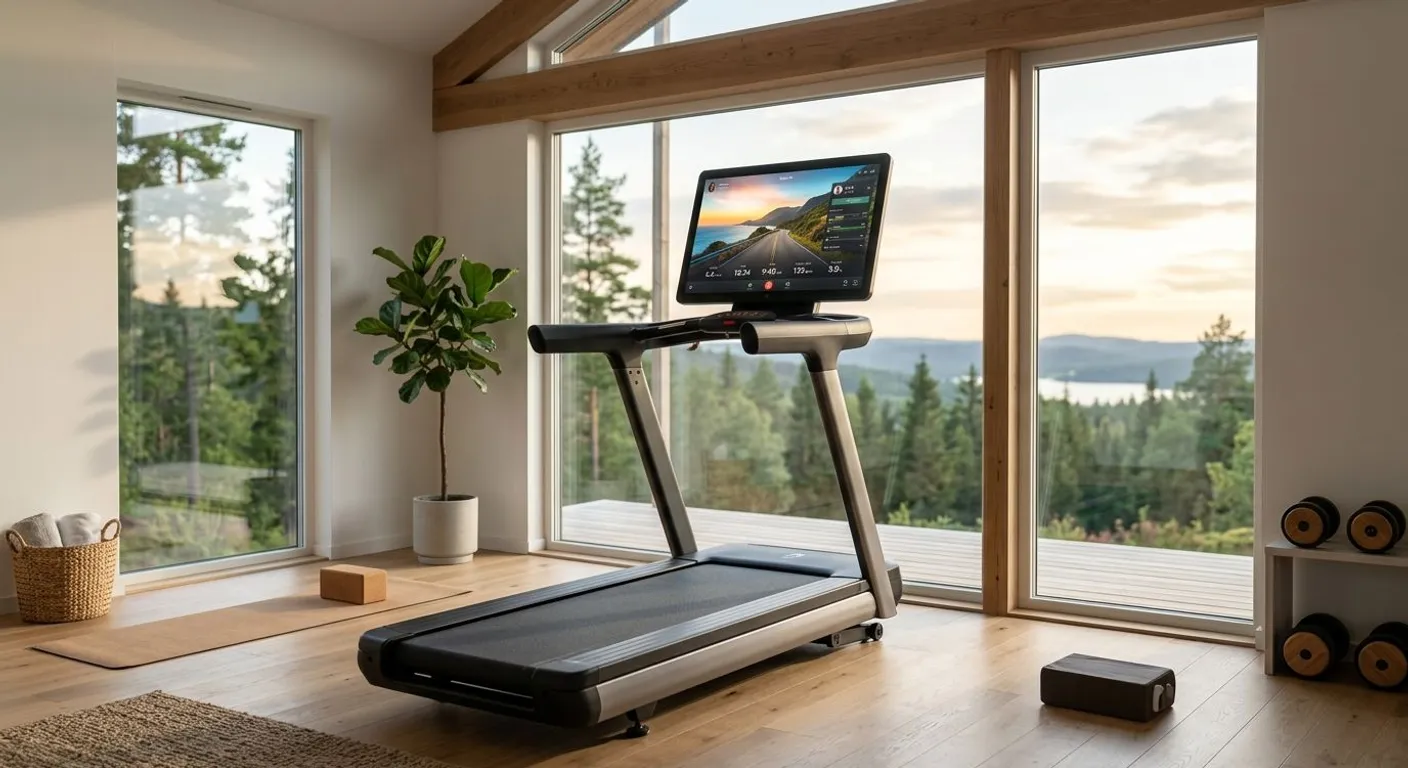
Cardio workouts are undergoing a major transformation alongside the growing popularity of home exercise habits and advancements in fitness technology. Traditional treadmills with fixed speed settings and basic displays are giving way to smart systems that monitor user performance in real time and adapt accordingly. Thanks to artificial intelligence algorithms, integrated sensors, and interactive platforms, smart treadmills deliver a professional athletic experience in a home setting.
Achieving fitness goals while working out at home is directly linked to accurate pace tracking, protecting joint health, and keeping motivation high. Smart treadmill technologies address these exact needs, elevating training to a personalized level.
What Is a Smart Treadmill and How Does It Work?
Smart treadmills are systems that analyze running data in real time using built-in Internet of Things (IoT) technology and advanced processors. They do not merely display distance covered and estimated calories burned; they process critical metrics such as stride length, ground contact time, body balance, and heart rate dynamics.
These devices connect to mobile applications, smartwatches, and external sensors via wireless communication protocols such as Bluetooth, Wi-Fi, and ANT+. The collected data is processed by AI engines to create customized workout programs and automatically update the treadmill's parameters.
Key Technologies That Set Smart Treadmills Apart
The main technological innovations that distinguish next-generation treadmills from classic models and make workouts more effective include:
AI-Powered Automatic Adaptation
Modern smart treadmills feature AI algorithms that detect a runner's pace and fatigue level. For instance, if you exceed your target heart rate zone, the machine gradually decreases the incline or speed. Similarly, if your tempo drops, it makes subtle adjustments to keep you on target. This autonomous control mechanism prevents sudden overexertion.
Smart Cushioning and Dynamic Deck Systems
Running on hard surfaces can exert high pressure on knees, ankles, and hip joints. Adaptive cushioning systems in smart treadmills dynamically adjust the flexibility level based on the runner's weight and strike point. They absorb impact during heel strike while firming up during toe-off to provide a stronger propulsive force.
Reducing shock load during a run directly impacts post-workout recovery as well. Just as using post-workout recovery devices is beneficial for minimizing muscle fatigue after intense running sessions, training on a flexible surface during exercise is equally critical.
Interactive Screens and Virtual Route Integration
One of the biggest obstacles in home workouts is monotony. HD or 4K touchscreen displays on smart treadmills integrate seamlessly with popular fitness applications (iFit, Zwift, Kinomap, etc.). Users can run virtually on tracks across different parts of the world.
When a virtual course heads uphill, the treadmill's incline motor automatically engages to simulate the actual gradient of the trail. Furthermore, devices that synchronize with platforms offering a VR fitness experience to enhance digital entertainment transform workouts into an engaging, gamified experience.
Wearable Device Synchronization
Advanced models work in full sync with accessories worn on the user's wrist or chest. Data collected via a smart fitness tracker while training outdoors or in nature can be transferred directly to the smart treadmill at home. This consolidates your entire cardio history within the ecosystem into a single center.
Comparison Table: Traditional vs. Smart Treadmills
| Feature | Traditional Treadmill | Smart Treadmill |
|---|---|---|
| Speed/Incline Adjustment | Via manual buttons | Automatic and AI-assisted |
| Deck Structure | Fixed flexibility | Dynamic/Adaptive cushioning |
| Data Analysis | Basic (Speed, time, distance) | Advanced (Cadence, ground contact time, VO2 max) |
| Connectivity | None or limited Aux/USB | Wi-Fi, Bluetooth, App integration |
| Virtual Course Support | Not available | Live/Virtual reality and incline simulation |
| Injury Prevention | At the user's discretion | Automatic heart rate and fatigue-focused protection |
What to Consider When Buying a Smart Treadmill?
Before investing in a smart treadmill, it is essential to define your needs accurately:
- Motor Power and Noise Level: For home environments, choose models featuring brushless motor technology, generating at least 2.5–3.0 HP continuous power, and operating at low decibels.
- Software and Ecosystem Support: Check whether the platform requires subscription fees and whether it permits data sharing with third-party apps (Strava, Apple Health, Garmin Connect).
- Belt Width and Dimensions: For a safe running stride, a belt width of at least 45–50 cm and a length of 130–150 cm is recommended.
- Foldability and Storage: If space at home is limited, consider compact models equipped with hydraulic folding systems.
Smart treadmills are not just cardio equipment; they act as personal trainers guiding you in the comfort of your home. By choosing the right technology, you can make your workouts more sustainable, safe, and enjoyable.
References
Frequently Asked Questions
What is the biggest difference between a smart treadmill and a traditional treadmill?
The biggest difference is interactive connectivity and artificial intelligence. Smart models automatically adjust speed and incline based on the user's heart rate and performance data, while offering virtual route simulations.
Are smart treadmills quiet enough for home use?
Yes, next-generation smart treadmills typically feature high-torque yet quiet brushless motors and sound-absorbing deck layers.
Do virtual running apps require a subscription?
Most popular interactive platforms like iFit or Zwift operate on a monthly or annual subscription model. However, the basic smart modes and manual workout options on the machines are free.
Will a smart treadmill pair with my smartwatch?
Most smart treadmills support Bluetooth or ANT+ connectivity, enabling real-time data sharing with smartwatches such as Apple Watch, Garmin, Fitbit, and Suunto.
This content was researched and prepared by the İlgi Alanları editorial team and reviewed for accuracy and readability before publication. Information on health, finance and investment topics is general in nature and does not replace professional advice.