Surf Culture and Choosing the Right Board: A Guide to Becoming One with the Waves
Discover the surfing lifestyle that merges with the rhythm of the ocean; learn the key tips for choosing the surfboard best suited to your wave conditions, experience level, and physical traits.

Surfing is not merely a sport of standing on top of waves; it is a deep-rooted culture that teaches respecting the rhythm of the ocean, practicing patience, and living in complete harmony with nature. Beginning as a traditional ritual in the Pacific Islands, this journey has evolved into a global lifestyle today. For everyone stepping into the water, the most critical step is choosing the right surfboard—the core instrument of this culture. While picking the wrong board can make catching waves difficult and dampen your motivation, selecting a board suited to your body and skill level accelerates your progress.
The Birth of Surf Culture and Lifestyle
Surfing traces its roots back to ancient Polynesia and the Hawaiian royalty. Known in that era as "he'e nalu" (wave sliding), this act was a symbol of social status and a spiritual bond with nature. Popularizing along the coasts of California and Australia in the mid-20th century, surfing created a broad lifestyle encompassing everything from music and fashion to architecture and environmental awareness.
One of the most important elements of surf culture is lineup etiquette, or the rules of wave priority. The surfer closest to the peak of the wave having the right of way forms the foundation of safety and courtesy in the water. Just like the mental focus we emphasized in our freediving guide, reading the movements of the ocean and respecting the environment are essential in surfing.
Key Parameters in Choosing the Right Surfboard
Finding the right board means establishing a balance between your physical build and the hydrostatic power of the water. Here are the main variables you should consider when selecting a board:
- Volume (Liters): This is the most critical metric determining how much buoyancy the board provides in the ocean. High volume makes paddling easier and allows you to catch even small waves effortlessly.
- Length: The distance from nose to tail. Long boards offer stable and fast paddling, while short boards deliver sharp maneuverability.
- Width and Thickness: The widest point of the board increases stability, while thickness directly contributes to volume.
- Rocker (Board Curve): The curve at the nose and tail of the board. A high rocker prevents pearling (nose-diving) in steep, heavy waves, whereas a flat (low) rocker generates more speed on slower waves.
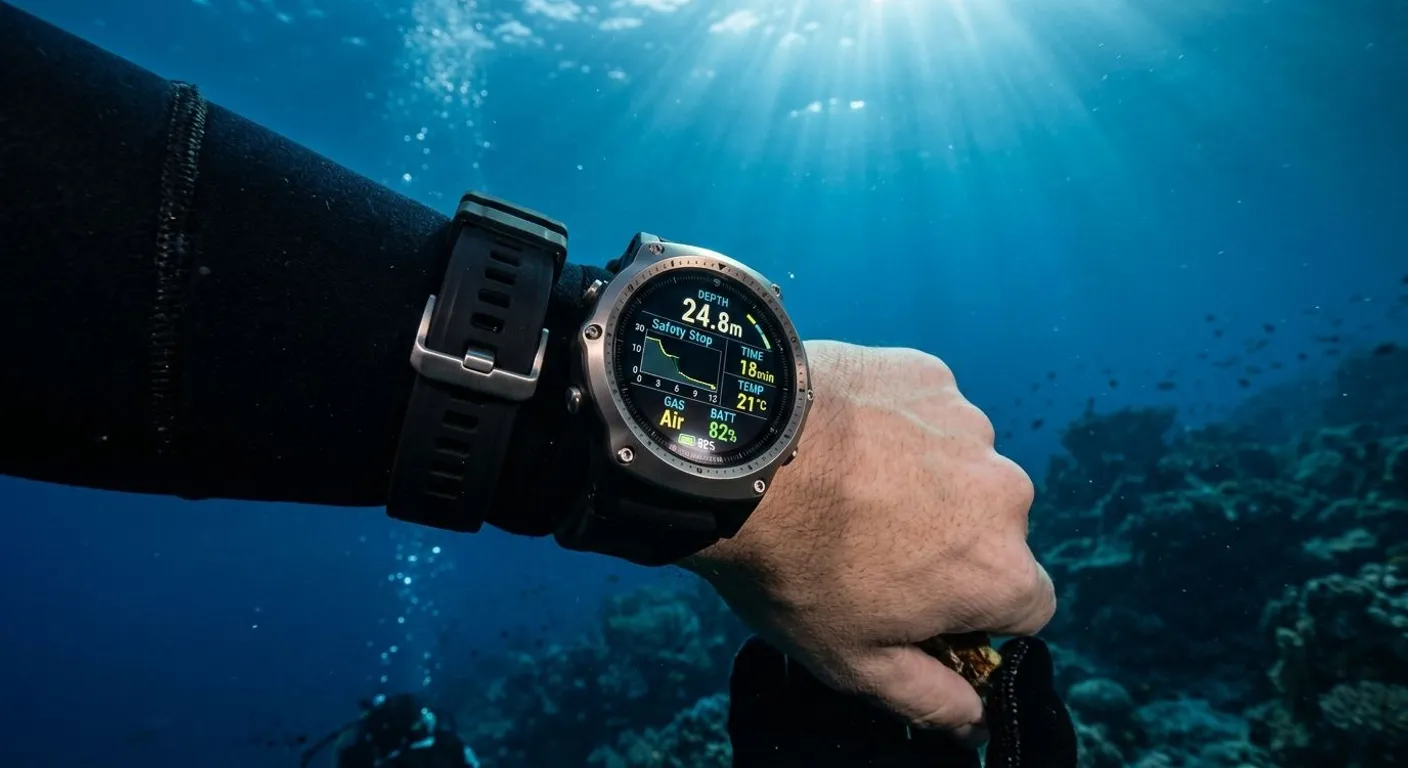
To ensure precise timing and safety tracking in challenging water conditions, much like the durable gear discussed in our dive watches and underwater technology article, surfing equipment must also be chosen to withstand the harsh marine environment.
Surfboard Types and Their Uses
There are main board categories designed for different wave types and skill levels:
Soft-top / Foamie (Beginner Level)
Crafted with a soft foam material on the upper surface, these boards provide maximum stability thanks to their high volume. Since they minimize the risk of injury during falls, they are the safest option for beginners.
Longboard (Classic Choice)
Typically 9 feet or longer, these boards feature a rounded nose. They are ideal for gliding on soft, small, and long-breaking waves. They are an absolute favorite for those who enjoy classic surf style and cross-stepping on the board.
Funboard / Mid-length (Transition Boards)
Ranging in size from 7 to 8 feet, these combine the stability of a Longboard with the mobility of a Shortboard. They serve as an excellent bridge for intermediate surfers looking to upgrade from their first board.
Shortboard (Performance)
Featuring pointed noses, low volume, and sharp rails, these boards are designed for executing high-level maneuvers, turns, and aerials on steep, fast waves. They require advanced physical conditioning.
Fish (Speed and Small Wave Performance)
Short, wide boards featuring a swallow tail cut. They can generate high speed even in weak waves and offer a smooth, fluid riding experience.
Surfboard Types Comparison Table
| Board Type | Level | Length Range | Average Volume | Key Feature |
|---|---|---|---|---|
| Soft-top | Beginner | 8'0" - 9'0" | 60 - 90 Liters | High safety, easy paddling, and maximum stability |
| Longboard | Beginner / Advanced | 9'0" and above | 60 - 80 Liters | Seamless glide on small waves, classic style |
| Funboard | Intermediate | 7'0" - 8'0" | 45 - 65 Liters | Easy turns, smooth transition adaptation |
| Shortboard | Advanced | 5'8" - 6'4" | 25 - 35 Liters | High maneuverability, radical turns |
| Fish | Intermediate / Advanced | 5'4" - 6'0" | 30 - 42 Liters | High speed and agility in weak waves |
How to Calculate Volume Based on Your Physical Traits
When selecting a surfboard, the ratio between your weight and skill level is vital. As a general rule:
- Beginner Level: Aim for a volume (liters) that is 1 to 1.2 times your body weight (kg). For example, a board between 70–85 liters is ideal for a 70 kg beginner.
- Intermediate Level: A volume of 0.5 to 0.7 times your body weight is sufficient.
- Advanced Level: A volume of 0.35 to 0.45 times your body weight is preferred.
Insufficient volume causes you to sink too deep into the water and exponentially increases the effort needed to catch a wave.
Surf Equipment and Board Maintenance
After selecting the right board, attention should be paid to auxiliary gear to maximize performance and extend board lifespan:
- Wax: Prevents your feet from slipping on the top deck of the board. You should select wax suited to the water temperature (cold, cool, warm/tropical water).
- Leash (Safety Cord): Prevents the board from drifting away from you or hitting others when you fall. You should choose a leash equal in length to your surfboard.
- Fins: Provide directional control and hold for the surfboard. Single fin, Twin, Thruster (three), or Quad (four) configurations completely transform the board's riding characteristics.
Avoiding leaving your board in direct sunlight and immediately repairing epoxy or fiberglass cracks prevents water absorption and extends your board's lifespan for years.
Resources
Frequently Asked Questions
What size board should a beginner surfer choose?
For beginners, boards that are at least 8 feet (8'0") long, have plenty of volume (60–90 liters), and feature a soft foam top (Soft-top) are ideal.
Why is surfboard volume (liters) so important?
Volume determines the surfboard's buoyancy in the water. High volume makes paddling easier, helps you catch waves faster, and keeps you balanced on top of the water.
What does surf wax do and how is it used?
Surf wax is applied to the top surface of the board to prevent your feet from slipping on wet surfaces. You should choose a wax type suited to the water temperature.
What is the main difference between a Shortboard and a Longboard?
A Longboard is longer, higher in volume, stable, and comfortable in small waves; a Shortboard is short, low in volume, and designed for advanced surfers focusing on speed and sharp maneuvers.
This content was researched and prepared by the İlgi Alanları editorial team and reviewed for accuracy and readability before publication. Information on health, finance and investment topics is general in nature and does not replace professional advice.