Smart Home Control Panels Guide for Minimalist Living
Gathering tech clutter onto a single sleek screen, smart home control panels offer an aesthetic and functional organization for those embracing a minimalist lifestyle.
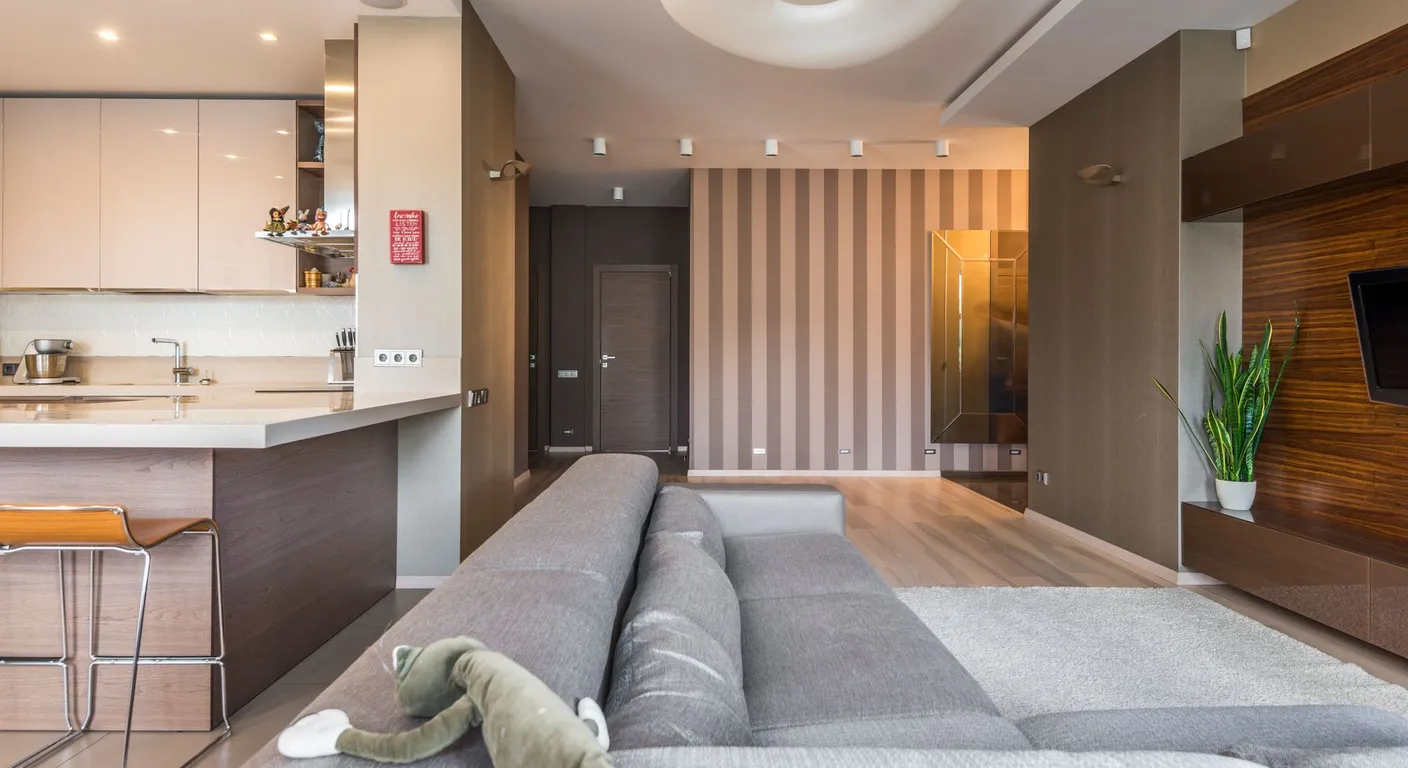
Photo: Max Vakhtbovych / Pexels
While advancing technology makes our living spaces easier to manage, it can also drag our homes into digital clutter. Downloading a separate mobile app for every smart device, cluttering rooms with different remotes, or covering walls with rows of switches directly contradicts the minimalist living philosophy. Minimalism is not just about owning fewer possessions; it is about simplifying life, mind, and living spaces to foster focus. This is where smart home control panels come to the rescue, unifying all technology at home into a single aesthetic and functional hub.
If you want to create a clutter-free, functional, and visually balanced environment in your home, crowning your smart home automation with the right control panel is essential. A well-chosen panel manages all your devices like an invisible conductor, helping preserve the soul of your space.
Minimalist Living and Smart Home Integration
A minimalist home design relies on the principle of 'less is more.' Reducing visual noise brings mental relaxation. However, traditional smart home approaches come with separate ecosystems for each device: a separate app for smart bulbs, an individual panel for the thermostat, and a different notification screen for security cameras. This transforms technology from a tool that simplifies life into a new burden to manage.
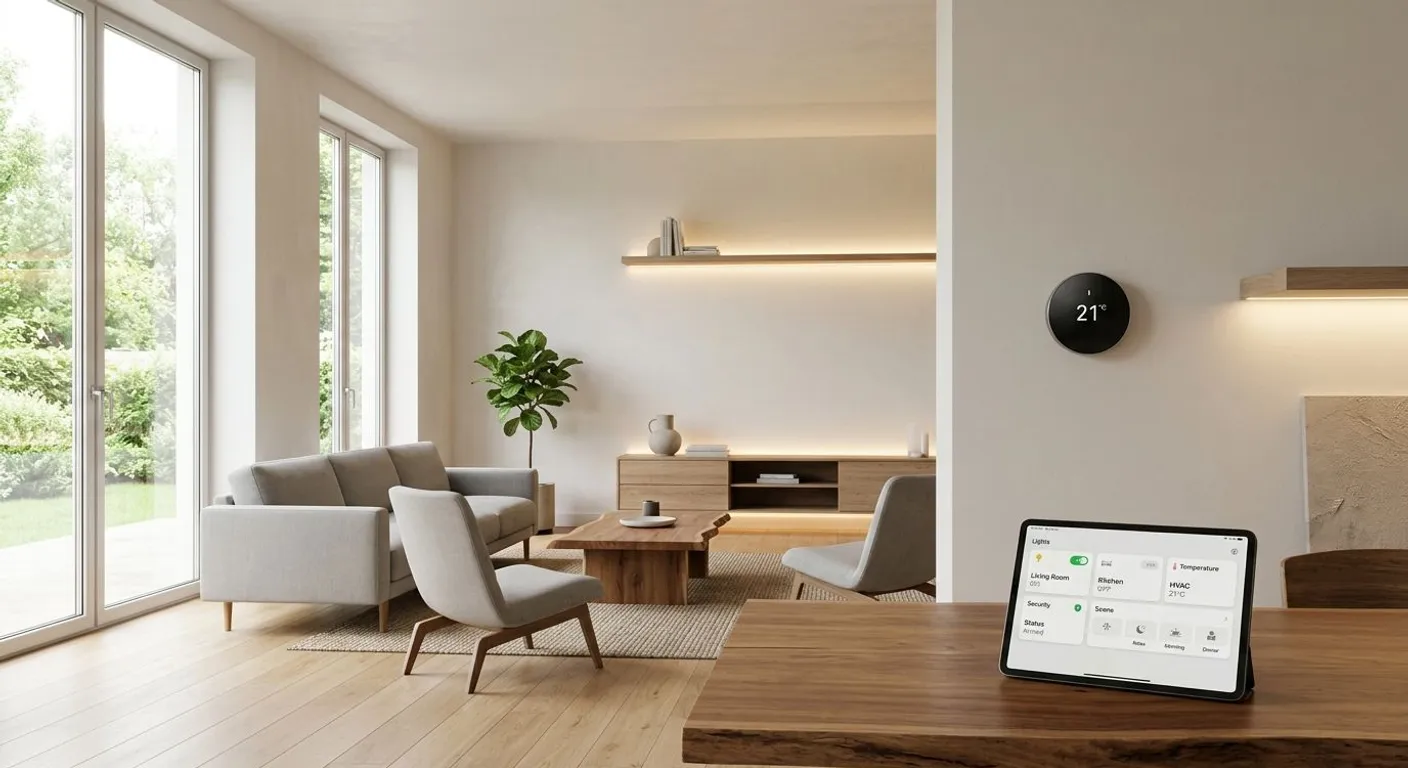
Smart home control panels eliminate this chaos. Replacing complex clusters of wall buttons or piles of remotes on your coffee table, a single sleek touch panel brings tranquility to your living space. If you are just stepping into the automation world, it is beneficial to make a holistic plan by keeping the principles of building smart home automation from scratch in mind while building your infrastructure.
What Is a Smart Home Control Panel and How Does It Work?
A smart home control panel is a combination of hardware and software that brings together devices running on various protocols (Zigbee, Z-Wave, Wi-Fi, Bluetooth, or Matter) into a single centralized system. They can come as fixed in-wall panels, portable tablet-style interfaces, or low-energy screens based on E-Ink (electronic ink) technology.
Thanks to these panels, you can:
- Scenario Creation: Trigger scenes like 'Leaving Home', 'Movie Mode', or 'Night' with a single touch.
- Centralized Visualization: Monitor home temperature, lock status, and energy consumption in real time.
- Reducing Physical Clutter: Combine room thermostats, light switches, and lock panels onto one screen.
Things to Consider When Choosing a Panel for a Minimalist Home
Not every control panel is suitable for a minimalist lifestyle. Overly colorful, eye-straining screens with ads or complex menus create new visual noise instead of offering simplicity. Consider the following points to make the right choice:
1. Screen and Interface Design (UI/UX)
A minimalist interface should present only the information you need. Models featuring black-and-white or pastel tones, dark mode support, and the ability to turn off completely or turn into a simple digital clock when idle should be preferred. E-Ink (electronic paper) panels are an excellent alternative for minimalist spaces because they emit no light and look just like a framed picture.
2. Protocol Compatibility and Universal Support
It is extremely important that the panel you choose supports open-source or universal standards such as Matter and Home Assistant. Ensuring that smart lighting solutions and security equipment from different brands communicate seamlessly through the same panel eliminates the need for additional hubs.
3. Mounting and Cable Concealment
Visible cables are one of the biggest enemies of minimalism. In-wall models (flush-mounted) connected directly to junction boxes leave no exposed cables, preserving architectural integrity. If you are renting or prefer to avoid renovation work, consider wireless charging panels with magnetic charging docks.
Comparison of Smart Home Control Panel Types
In the table below, you can examine the key features of control panel types frequently preferred in minimalist homes:
| Panel Type | Visual Integration | Ease of Installation | Energy Consumption | Minimalist Fit | No/Low Light Pollution |
|---|---|---|---|---|---|
| Flush-Mount Touch Panel | High | Medium / Hard | Low | Very High | Yes (Screen Off Available) |
| E-Ink (E-Paper) Control Panel | Excellent | Easy | Very Low | Highest | Yes (Zero Light Emission) |
| Customized Tablet Panel | Medium | Very Easy | Medium | Medium | Partially (Software Dependent) |
| Desktop Smart Display | Low | Very Easy | Medium | Low | No (Backlit Display) |
Using Minimalist Control Panels in Different Living Spaces
Different areas in the home require different solutions. When positioning your control panel, consider your daily habits.
Entrance and Hallway
A flush-mounted panel placed at the entrance allows you to manage the entire system with a single touch when leaving or entering the house. Tapping 'Away' mode turns off all lights, sets climate control to eco mode, and arms the security system. This saves you the hassle of walking through every room to check lights before leaving home.
Living Room
In living rooms, tabletop tablets or wall-flush E-Ink panels are commonly preferred. Here, the panel is used to synchronize the TV, sound system, and ambient lighting. This allows you to tuck away all the remotes lined up on your console into a drawer.
Bedroom
Bright, continuously glowing screens in the bedroom negatively affect sleep quality. Therefore, select panels that turn off completely at night or activate at very low brightness only when motion is detected. From here, you can control the temperature and track the status of devices operating at night through smart plugs and sensors.
Importance of Privacy and Local Control
Minimalist living means simplifying mental processes as well as physical objects. Systems that constantly rely on cloud servers and become useless during internet outages can cause anxiety. Panels operating over a local network (Local Control) process data without sending it outside your home. This reduces response times to milliseconds while protecting digital privacy at a high level.
In Conclusion: Making Technology Invisible
The ultimate goal of minimalism is not to reject technology, but to make it an invisible, natural part of life. A well-chosen smart home control panel hides complex automation processes behind a clean interface. Making your home smart without compromising on aesthetics and simplicity is one of the most sustainable investments for improving your quality of life.
References
Frequently Asked Questions
Can a minimalist control panel be installed in an older home without demolition?
Yes, you can easily install panels without any renovation using desktop panels with wireless charging docks or battery-powered E-Ink panels mounted directly to the wall surface.
What are the advantages of E-Ink (electronic paper) smart home panels?
E-Ink panels emit no light, reduce eye strain, consume minimal energy, and blend seamlessly into minimalist decor like framed artwork.
Does it make sense to turn tablets into smart home control panels?
Yes, by switching an old tablet to 'Kiosk' mode and installing a minimalist interface, you can wall-mount it to create a budget-friendly control panel.
Does the control panel continue to work if the internet goes down?
Panels that support Local Control continue to manage home devices over your local Wi-Fi or Zigbee network even without an active internet connection.
This content was researched and prepared by the İlgi Alanları editorial team and reviewed for accuracy and readability before publication. Information on health, finance and investment topics is general in nature and does not replace professional advice.