Graphene Powerbank Technology: A New Era in Portable Charging
Graphene-based powerbank models rewrite the rules of mobile energy with charge times completed in minutes and thousands of charge cycles.
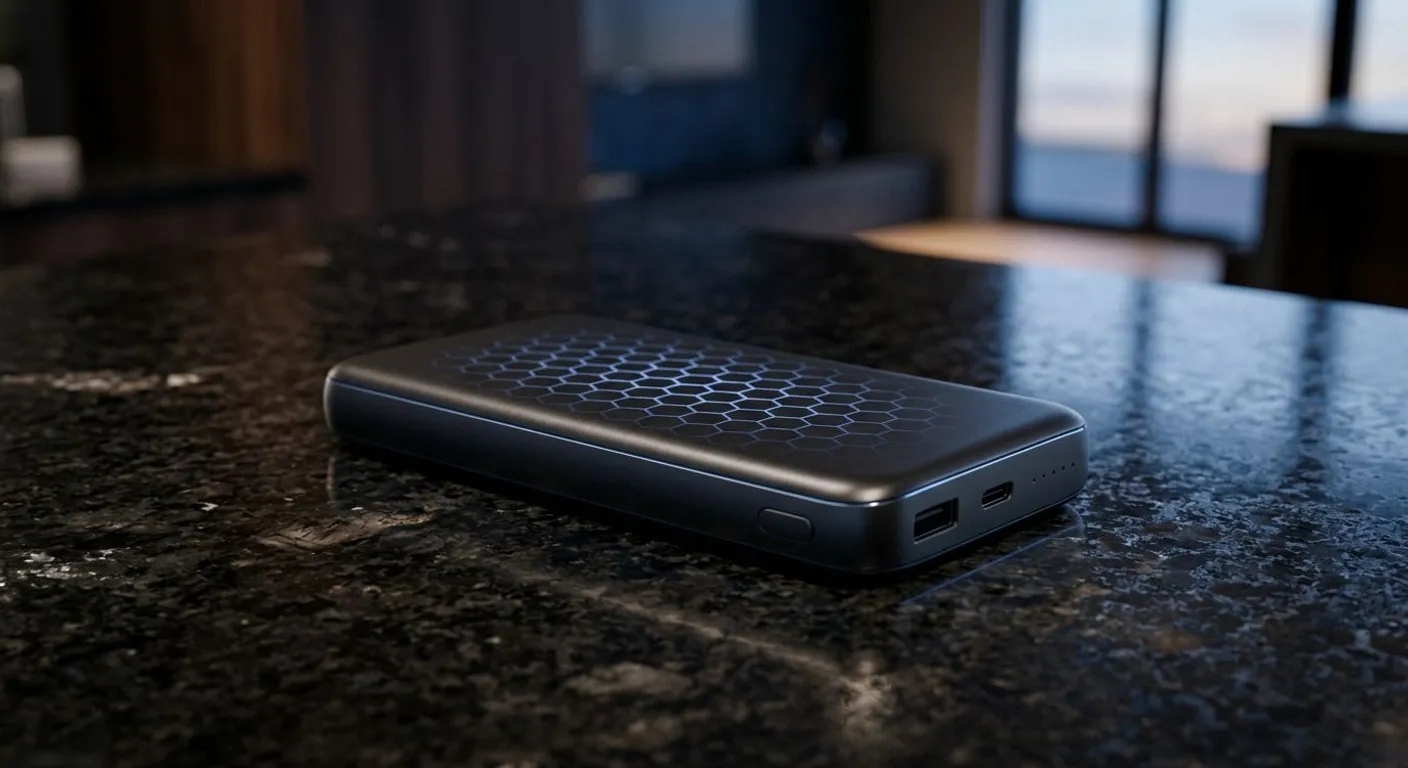
Throughout the day, we carry multiple digital devices, from smartphones and laptops to headphones and tablets. However, the high performance offered by these devices increases battery consumption at the same rate. Traditional lithium-ion portable chargers that we have been using for years are both slow to recharge and heat up significantly under high currents. This is precisely where graphene technology, a miraculous breakthrough in materials science, comes into play, fundamentally transforming our mobile charging habits.
What Is Graphene and How Is It Changing Battery Technology?
Graphene is a two-dimensional nanomaterial formed by carbon atoms arranged in a single-layer honeycomb crystal lattice. It is 200 times stronger than steel, significantly more conductive than copper, and almost as light as a feather. Revolutionizing the electronics world since its discovery in 2004, this material provides a massive performance leap when integrated into battery architecture.
In traditional batteries, internal resistance encountered by lithium ions moving through conductive media causes part of the energy to turn into heat. Graphene composite electrodes, on the other hand, reduce this internal resistance nearly to zero. As the mobile ecosystem evolves rapidly and high-energy-demanding hardware like the future of foldable screens becomes widespread, such innovative solutions on the battery side have become essential.
Ultra-Fast Charging and Thermal Management Power
The most prominent advantage of graphene-powered powerbank models is their incredible charging speeds. Fully recharging a standard 10,000 mAh capacity lithium-ion portable charger from a wall outlet takes an average of 3 to 4 hours. However, a graphene powerbank powered by a high-wattage adapter can reach 100% capacity in as little as 15 to 20 minutes.
The key factor making this speed possible is superior thermal conductivity. Standard batteries overheat when charged at high currents; overheating leads to cell degradation and even safety hazards. Graphene batteries, by contrast, rapidly disperse heat generated during charging across their entire surface area. Thus, the device safely continues drawing current at high wattages without overheating.
Comparison: Graphene Composite vs. Standard Lithium-Ion Batteries
The table below clearly highlights the technical differences between traditional lithium-ion portable chargers and next-generation graphene composite batteries:
| Feature | Standard Lithium-Ion Powerbank | Graphene Composite Powerbank |
|---|---|---|
| Full Charge Time (10,000 mAh) | 2.5 - 4 Hours | 15 - 30 Minutes |
| Cycle Life (80% Capacity) | 300 - 500 Charges | 1500 - 2000+ Charges |
| Operating Temperature / Heating | Significant heating at high current | Low temperature, excellent heat dissipation |
| Safety Risk | Swelling, performance loss, and overheating | High thermal stability, no risk of explosion |
| Charging Efficiency | 75% - 80% | 90% - 95% |
| Cost / Price | Low / Economical | Medium - High (Technological investment) |
Advantages of Graphene Powerbanks in Daily Use
The advantages provided by graphene batteries are not limited to laboratory tests; they directly contribute to daily quality of life.
- Time Management and Emergency Flexibility: When you realize your battery is dead right before leaving home, trying to charge a traditional portable battery won't help much. With a graphene device, however, you can plug it in for 10 minutes while brewing your coffee to load enough energy for the entire day.
- Long-Lasting Investment: While standard batteries lose capacity and become unusable within 1–2 years, graphene batteries retain their original capacity for over 1,500 charge cycles. This means you can use the device for about 5–6 years without experiencing performance loss.
- Laptop and Multi-Device Charging: Thanks to high wattage output (Power Delivery - PD 65W, 100W), it can charge not only phones but also powerful laptops powered via Type-C at full speed.
Just like the wireless power transfer solutions you prefer at home or in the office, enabling wired charging architecture to reach maximum speed under mobile conditions delivers an uninterrupted digital experience.
Eco-Friendly Structure and Sustainability
One of the biggest problems in the technology world is the growing volume of e-waste (electronic waste) every day. Due to their short lifespans, lithium batteries are frequently discarded, harming nature with their chemical contents.
Graphene powerbank products offer up to 4 times longer lifespan, significantly reducing the amount of battery waste generated in the long run. Furthermore, manufacturing processes aim to use fewer harmful heavy metals. Today, alongside growing environmental awareness, the interest shown in renewable energy solutions such as eco-friendly solar panel systems is driving demand for green technologies like graphene in portable energy storage products as well.
Things to Consider When Buying
There are misleading products on the market sold under the name of graphene that only feature a graphene coating on their outer casing. To experience a true graphene product, you should consider the following points:
- Input and Output Wattage Ratings: For the device to recharge quickly, merely being labeled "graphene" is not enough; its Input rating must support at least 60W or 100W PD.
- Compatible Charger Adapter: To recharge your graphene powerbank in 15–20 minutes, your wall charger adapter must also be a next-generation GaN (Gallium Nitride) adapter capable of outputting at least 65W–100W.
- Cell Structure Declaration: Authentic graphene device manufacturers explicitly state in their technical documentation that graphene composite cells are used in the cathode or anode structure.
The Future Vision of Energy Storage
Graphene still carries a higher price tag compared to lithium-ion in terms of mass production costs. However, as manufacturing techniques improve and nanomaterial synthesis costs decrease, graphene batteries will become standard in all smartphones, electric vehicles, and wearable tech within a few years. This turning point in energy storage technology represents the biggest step toward consigning our dependence on wall sockets to history.
References
Frequently Asked Questions
Are graphene powerbanks made entirely of graphene?
No, current batteries are not 100% pure graphene; they are 'graphene composites' infused with graphene into lithium battery chemistry. Pure graphene cannot yet be commercially processed at this scale.
Will a graphene powerbank damage my phone's battery?
No, it will not. Smartphones only draw the maximum current they support. Even if the powerbank offers high power output, the phone's charging controller chip safely regulates and draws only the power it needs.
Do I need a special adapter to fast-charge a graphene powerbank?
Yes. For the powerbank to recharge in 15–20 minutes, a high-speed charging adapter supporting at least 65W or 100W Power Delivery (PD) is required.
Why are graphene portable chargers more expensive?
Synthesizing high-quality graphene and producing it at the nanoscale requires advanced technology. Because manufacturing costs have not yet dropped to lithium-ion levels, their prices remain higher.
This content was researched and prepared by the İlgi Alanları editorial team and reviewed for accuracy and readability before publication. Information on health, finance and investment topics is general in nature and does not replace professional advice.