Minimal Wall Art Trends: Modern and Serene Spaces
Discover minimal wall art trends, texture usage, and proper framing techniques that add depth and serenity to spaces by leaving visual clutter behind.
The connection art forms with living spaces is being reshaped by the search for simplicity and serenity. In wall decoration, complex and crowded compositions are giving way to minimal wall art trends that add soul to a room without overwhelming its architecture. The new generation of minimalism relies not merely on the principle of "fewer colors and fewer items," but focuses on the emotional balance created by textures, light and shadow play, and natural materials.
If you want to create both aesthetic and mental spaciousness in your spaces, you can take a closer look at recent rising minimalist wall art approaches and ways to integrate these works into your living areas.
1. Textured Abstract Surfaces: Three-Dimensional Simplicity
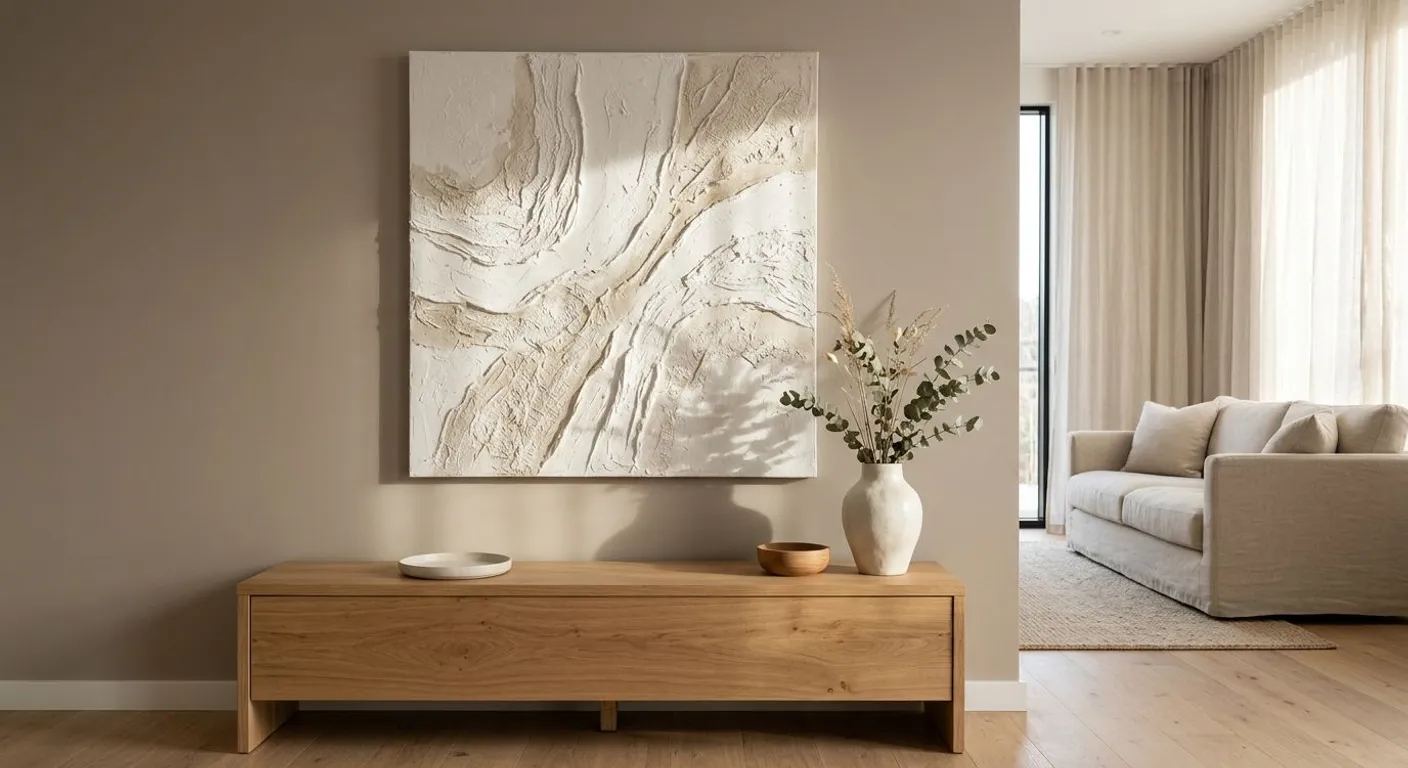
Following graphic prints and solid-colored canvases, texture and volume have taken center stage in today's minimalist art. Three-dimensional abstract works created using plaster, modeling paste, linen fabric, and natural mortars evoke a relief effect on the wall.
Despite using a monochrome (single color) palette, the shadows formed on the piece as daylight shifts angle add a constantly changing dynamism to the artwork. Textured paintings, especially in cream, beige, ivory, and stone gray tones, are becoming essential elements for living rooms and bedrooms seeking serenity. To bring such works to life in your own space, you can get inspired by our guide on setting up an abstract painting studio at home.
2. Warm Minimalism and Earth Tones
The cold grays and stark whites that dominated early minimalist design have given way to the more inviting movement of warm minimalism. Manifesting in wall art as well, this trend brings nature's calming color palette indoors.
Prominent color groups include:
- Terracotta and Brick Red: Brings natural warmth and depth to the space.
- Olive Green and Sage Tones: Creates an organic sense of tranquility.
- Warm Mink and Sand Beige: Creates seamless harmony with wooden furniture in the room.
While supporting mental calmness, these color palettes instantly soften the room's atmosphere. If you would like to examine the impact of colors on our emotional state, take a look at our article on art therapy with color psychology.
3. Fluid and Organic Forms
Sharp geometric lines are giving way to fluid and asymmetrical forms inspired by nature. Stone cross-sections, raindrop silhouettes, leaf contours, and freehand curves frequently appear in wall art.
Works of this style soften rigid architectural lines within the room, allowing the eyes to rest. A canvas painting featuring a single large-scale organic form acts as the room's primary focal point, eliminating the need for extra decorative clutter.
4. One-Line Art and Minimalist Typography
Completed without lifting the brush or pen from paper, one-line art continues to be a symbol of simplicity and elegance. These works—where human face silhouettes, botanical outlines, or abstract body forms are expressed with a single continuous line—suit minimalist and modern industrial interiors particularly well.
In addition, minimalist typographic prints featuring ample empty space (negative space) remain popular. Featuring a short word or philosophical sentence placed in the center of a large piece of paper with an elegant font, these works offer an atmosphere that fosters focus.
5. Sustainable and Natural Framing
In minimal wall art, the frame itself is considered part of the artwork. Instead of ornate and heavy frames, untreated raw oak, walnut, or slender metal frames are preferred. If glass is used in framing, non-reflective museum glass or wide matting (passe-partout) options take precedence.
The use of natural wood and recycled paper supports an environmentally conscious decor philosophy. To raise your awareness on this topic, you can check out our content on sustainable art supplies.
Comparison of Minimalist Wall Art Styles
The table below will help you choose the right minimalist wall art style for your space:
| Style Type | Key Feature | Recommended Material / Texture | Ideal Living Space |
|---|---|---|---|
| Textured Relief (Plaster Art) | Light-shadow interplay, 3D surface | Plaster, modeling paste, raw canvas | Living Room, Entryway |
| Earth-Toned Abstract | Warm, inviting, and organic | Acrylic, oil paint, matte paper | Bedroom, Dining Area |
| One-Line Art | Subtle, elegant, and contemporary | Ink, matte fine-art print | Home Office, Gallery Wall |
| Botanical Silhouettes | Natural, fluid, and peaceful | Watercolor, pressed plant, illustration | Sitting Room, Balcony/Patio |
Tips for Integrating Minimalist Wall Art into Your Space
How you place the artwork on the wall is just as important as selecting it in determining the aesthetic impact achieved. You can follow these steps for a proper minimalist display:
- Leave Negative Space: Do not try to fill the entire wall. The space around the artwork allows the art to breathe and stand out.
- Choose the Right Height: The center point of the painting should be at eye level (approximately 145-150 cm off the floor).
- Scale Balance: Rather than hanging a small painting over a giant sofa, opt for a large piece that is roughly 2/3 the width of the furniture.
- Spotlight Lighting: Illuminating textured or relief works with warm spotlighting angled from above or from the side enhances the artwork's depth manifold.
Minimalist wall art is the most effective way to create a calming atmosphere in your personal sanctuary, rather than simply turning your home into an exhibition space.
Resources
Frequently Asked Questions
How should the size be determined when choosing a minimalist painting?
The width of paintings hung over a sofa or console should be about 2/3 of the total width of the furniture below. In a minimalist style, a single large-scale piece creates a stronger impact than multiple small paintings.
How should textured (plaster) paintings be maintained and cleaned?
Textured and relief paintings should be cleaned gently using a dry, soft-bristled brush or a microfiber duster. Wet cloths or chemical cleaners should not be applied to the surface.
Which minimalist wall art is suitable for small rooms?
In small spaces, monochromatic textured works in light cream, sand beige, or ivory tones, along with slim wooden framed one-line art, enhance the sense of depth.
This content was researched and prepared by the İlgi Alanları editorial team and reviewed for accuracy and readability before publication. Information on health, finance and investment topics is general in nature and does not replace professional advice.