The Future of Foldable Screens: Technology's Flexible Transformation
From smartphones to laptops, flexible display technology is fundamentally changing our relationship with digital devices. We examine the screen technologies of the future and the innovations that await us.
For many years, mobile device design was trapped within the boundaries of rectangular, fixed, and rigid glass slabs. However, breakthroughs in flexible OLED and MicroLED technologies have unlocked a new era in the hardware world. Although foldable screens were initially seen as an experimental luxury, today, thanks to advances in material science and engineering, they are taking center stage in mainstream technology.
The promise of offering a larger screen area without increasing device size is redefining user habits. A smartphone carried in a pocket transforming into a fully-fledged tablet in a matter of seconds represents a critical milestone in mobile productivity.
Material Revolution in Flexible Display Technology
The biggest problem experienced in the first generation of foldable devices was scratch sensitivity on the panel surface and a prominent crease. Although plastic polymer layers provided flexibility, they fell short of traditional glass in terms of touch feel and durability. Today, Ultra-Thin Glass (UTG) technology has changed this equation.
This special glass structure, which can be processed thinner than a strand of human hair, resists folding thousands of times while maintaining the smooth tactile feel of glass. Prominent developments in next-generation materials include:
- Self-Healing Polymers: Molecular coatings that automatically seal micro-scratches on the surface using heat or room temperature.
- Liquid Metal Hinge Systems: Teardrop (waterdrop) hinge designs that evenly distribute pressure at the folding point, reducing the screen groove appearance to zero.
- Advanced Dust and Water Resistance: Microscopic brush and seal mechanisms that prevent foreign matter from entering between flexible components.
Form Factors of the Future: Tri-Fold and Rollable Screens
Display technology will not remain limited to devices that simply fold in half. The industry is focusing on multi-fold and dynamic, shape-shifting bodies.
Tri-Fold Devices
Featuring two distinct hinge points, tri-fold systems make it possible to transition from a standard smartphone size to a professional tablet size over 10 inches. This architecture elevates the mobile office experience by allowing multiple apps to run simultaneously at full size.
Rollable and Expandable Screens
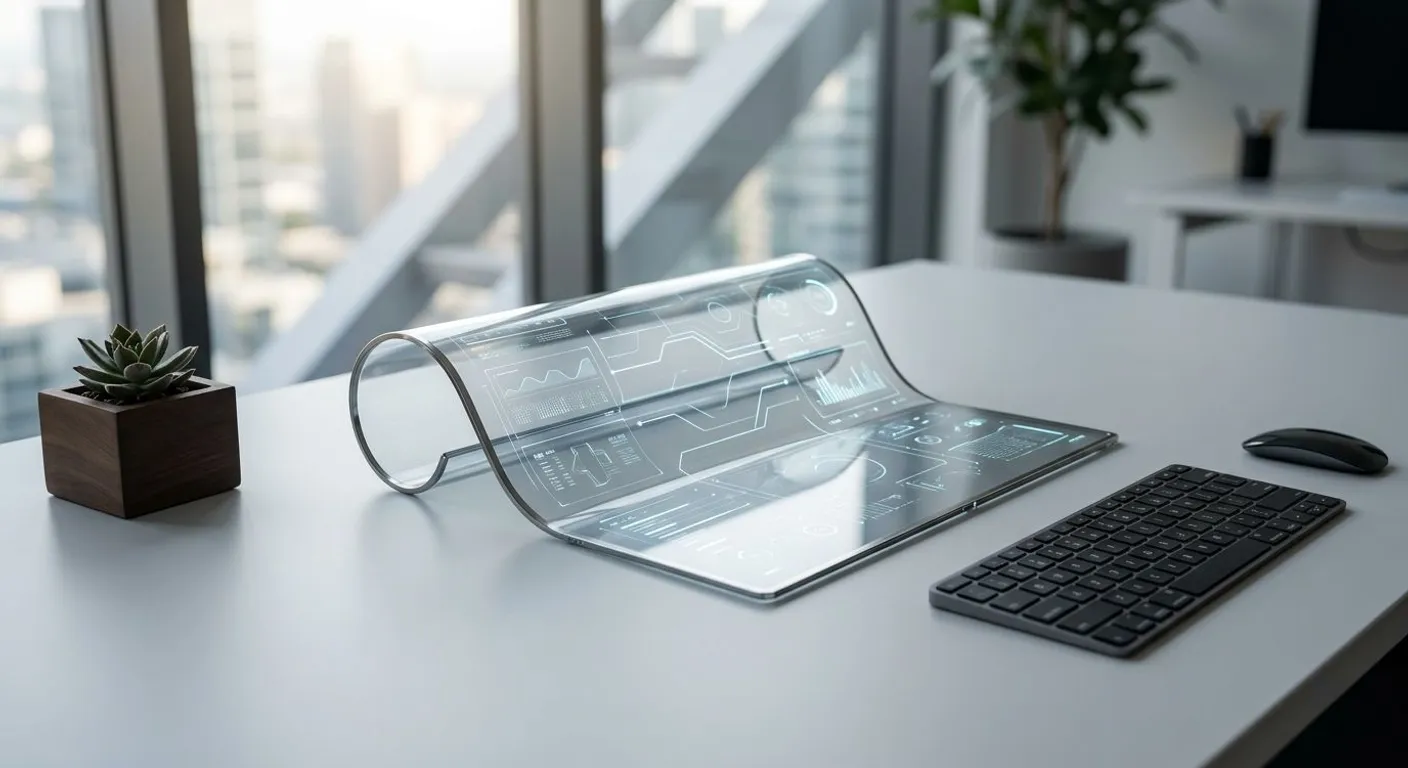
Completely eliminating the crease line, rollable screens rely on the principle of rolling the panel inside the device body like a scroll. When the user presses a button or performs a gesture, the screen expands sideways. By spreading mechanical stress over a broad surface rather than concentrating it on a single line, this approach reduces material fatigue and is considered one of the form factors with the highest potential for the future.
In the future, these flexible devices are expected to work fully integrated with wireless charging solutions such as wireless energy transfer to enhance portability.
Comparison Table: Flexible Display Form Factors
The table below compares the key characteristics of flexible display formats shaping the market and expected to become widespread in the near future:
| Form Factor | Key Advantage | Main Challenge | Ideal Usage Scenario |
|---|---|---|---|
| Clamshell | Ultra-compact size, easy to carry | Small battery capacity | Daily mobile use, pocket portability |
| Book-Style | Large screen, advanced multitasking | Body thickness and weight | Media consumption, reading, and productivity |
| Tri-Fold | Massive desktop-grade screen area | Complex hinge durability | Professional workflows, mobile design |
| Rollable | No crease, adjustable size | Motorized mechanism wear | Smart home systems, next-generation phones |
Ecosystem and Software Transformation
Hardware flexibility requires a radical transformation on the software side as well. In a scenario where screen size changes dynamically, operating systems'
Frequently Asked Questions
How durable are foldable screens?
Next-generation foldable screens are tested for 200,000 to 500,000 folds thanks to Ultra-Thin Glass (UTG) and teardrop hinges. This translates to more than 5 years of hassle-free use on average.
Will the screen crease completely disappear?
Yes. Thanks to new-generation teardrop hinge designs and flexible layer materials, the crease has become nearly invisible. Rollable display technology eliminates this crease entirely.
Is repairing a foldable screen expensive?
Replacing a foldable screen is more costly than standard glass screens due to flexible OLED panels and complex hinge mechanisms. However, repair costs are decreasing as production scale increases.
Will rollable screens replace foldable screens?
Rollable screens are a strong alternative because they eliminate the crease. However, due to mechanical motor requirements, they will coexist alongside foldable screens in different usage scenarios.
This content was researched and prepared by the İlgi Alanları editorial team and reviewed for accuracy and readability before publication. Information on health, finance and investment topics is general in nature and does not replace professional advice.