Ethnic Musical Instruments Collection: In Pursuit of World Sounds
Embark on an acoustic and cultural journey in your home with traditional instruments reflecting the spirit of different geographies. A guide to authentic instrument selection and preservation.
While music is humanity's universal language, the instruments used are unique identity cards reflecting the geographical conditions, beliefs, and lifestyles of the societies that speak that language. In the resonance of an African rhythm drum, one can feel the story of the tribe, and in the timbre of a Far Eastern wind instrument, the deep connection established with nature. Collecting traditional instruments is not merely a decorative or musical hobby; it is a profound journey that connects directly with cultural anthropology. In this guide, we will explore traditional instruments from around the globe, learn how to select authentic pieces, and examine the best ways to preserve this special collection in your living spaces.
What Is Ethnic Musical Instrument Collecting?
Ethnic musical instrument collecting is the systematic gathering of traditional sound generators specific to a particular geography, tribe, or local culture. Unlike modern orchestral instruments, these instruments are usually handmade, do not undergo standardized mass-production processes, and utilize completely natural materials such as gourds, animal hides, bamboo, bone, and native wood species.
Collectors generally adopt two distinct approaches: functional collecting and musicological preservation. While functional collectors focus on the instruments remaining actively playable, musicologists and anthropology enthusiasts prioritize the historical value, construction technique, and aged patina of the instrument.
Prominent Traditional Instruments from Around the World
Paying attention to the diversity of sound mechanisms (idiophones, membranophones, chordophones, and aerophones) when building a successful collection enhances both its visual and acoustic richness.
1. The African Continent: Sound of Rhythm and Body
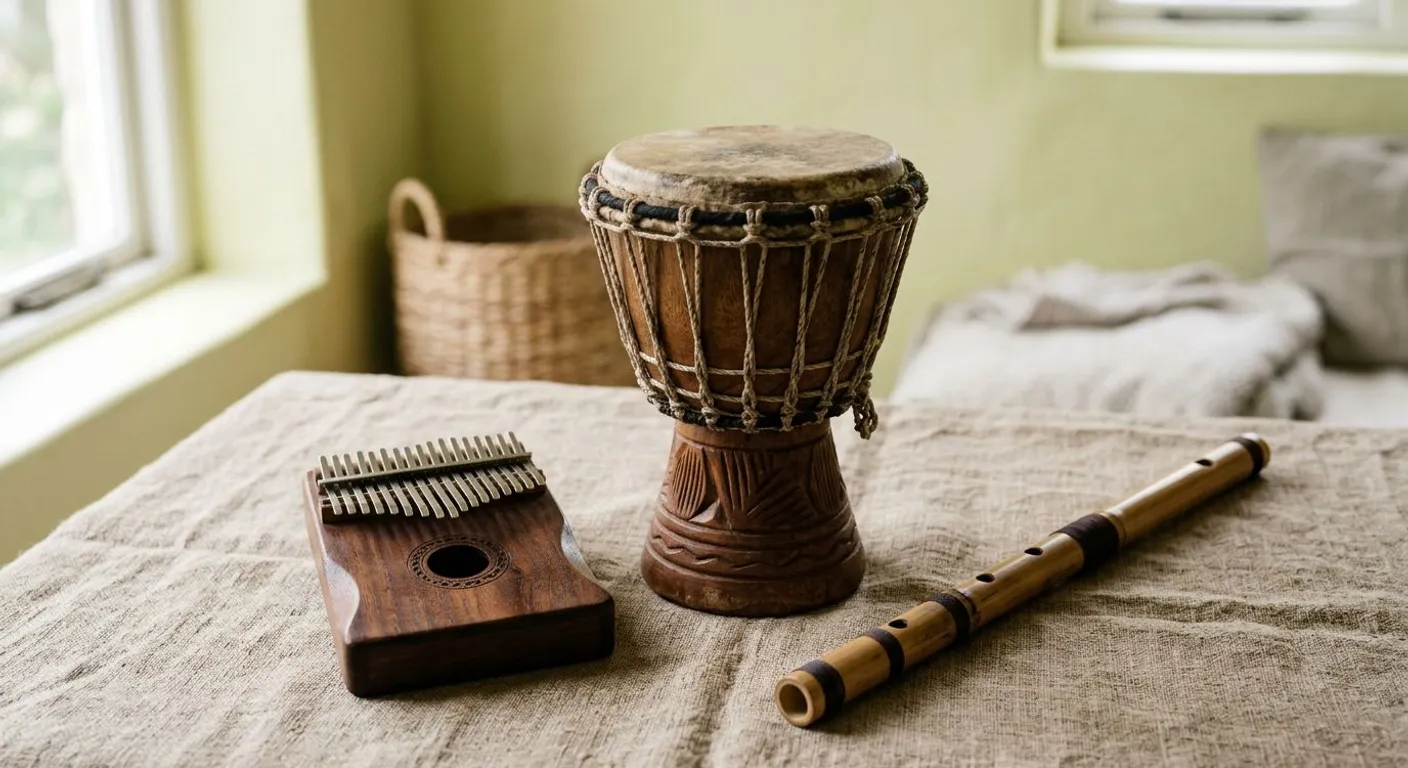
- Djembe (West Africa): A characteristic percussion instrument with a wide frequency range, made by carving a single tree trunk and stretching goat skin over it.
- Kalimba / Mbira (Zimbabwe & East Africa): A traditional idiophone with soothing tones, played by plucking metal keys arranged on a resonance box or board using the thumbs or fingers.
2. Asia and the Middle East: Mystical Timbres and Deep Acoustics
- Shakuhachi (Japan): A vertical flute made from the root of bamboo, used in Zen Buddhist meditation rituals. Its blowing technique requires distinct expertise.
- Sitar (India): One of the cornerstones of Indian classical music, featuring a long neck, a large gourd resonator, and sympathetic strings.
- Ney and Oud (Middle East & Eastern Mediterranean): Essential instruments of ancient Eastern culture that combine reed and wood in their simplest form with microtonal sounds.
3. Oceania and the Americas: Echoes of the Earth and Nature
- Didgeridoo (Australia): One of the world's oldest wind instruments, crafted from eucalyptus trees naturally hollowed out by termites.
- Charango (Andes): A small but high-pitched string instrument traditionally made from an armadillo shell, and nowadays from solid wood.
Comparison of Beginner-Level Ethnic Instruments
The table below summarizes the key features of popular traditional instruments for those starting a collection:
| Instrument | Origin | Instrument Type | Maintenance Difficulty | Ease of Playing |
|---|---|---|---|---|
| Kalimba | Africa | Idiophone (Keyed) | Low | Very Easy |
| Djembe | West Africa | Membranophone (Percussion) | Medium (Skin care) | Medium |
| Shakuhachi | Japan | Aerophone (Wind) | High (Humidity sensitivity) | Hard |
| Charango | South America | Chordophone (String) | Medium | Medium |
| Handpan (Hang) | Switzerland / Global | Idiophone (Metal) | Low (Rust protection) | Easy - Medium |
Authenticity, Ethical Sourcing, and Local Craftsmanship
The greatest challenge encountered when collecting ethnic instruments is distinguishing tourist souvenirs from genuine, tunable instruments with authentic cultural value. Products sold in mass-production souvenir shops mostly lack acoustic balance and are crafted solely for display purposes.
To build a genuine collection, a conscious travel approach should be adopted. Adopting the principles of slow travel philosophy by visiting the workshops of local artisans, witnessing the instrument-making process, and purchasing directly from the craftsman guarantees authenticity while supporting the local economy. Additionally, one must act cautiously and ethically regarding protected wood species under CITES (Convention on International Trade in Endangered Species) regulations (such as certain types of ebony and rosewood) or materials like ivory and tortoiseshell.
Instrument Preservation and Display in Living Spaces
Traditional instruments made from natural materials are highly sensitive to environmental factors. Wood cracking, skin slackening, and metal oxidation can be prevented through proper protection techniques.
- Humidity and Temperature Balance: The ideal relative humidity range for wood and leather instruments is between 45% and 55%. Excessively dry air causes wood to crack, while high humidity distorts its shape.
- Direct Sunlight: Keeping instruments away from ultraviolet rays prevents color fading and the degradation of natural glues.
- Periodic Maintenance: Leather surfaces should be moisturized with natural almond oil or specialized petroleum jellies, while wooden surfaces should be nourished with protective natural oils.
When displaying your instruments, it is possible to combine aesthetics with protection. You can utilize the principles of interior design with cultural objects to create proper focal points in the room, and opt for enclosed modular units from our guide on display case solutions for collectors to protect delicate or small-scale instruments from dust.
A Collection Beyond Music and Objects
An ethnic musical instrument collection carries a meaning far beyond merely accumulating objects. Each instrument embodies the wind, wood, human emotion, and centuries-old craft heritage of its place of origin. This special corner you create in your home will not only offer visual richness, but will also connect you to the shared frequency of world cultures every time you touch an instrument.
References
Frequently Asked Questions
Where should one start when collecting ethnic musical instruments?
Beginners can opt for idiophones and membranophones that are easy to maintain, stay in tune, and have a gentle learning curve, such as the Kalimba (thumb piano) or a small Djembe.
How should wooden and leather ethnic instruments be preserved?
Instruments should be kept away from direct sunlight and heat sources like radiators. A relative humidity level of 45%-55% should be maintained, and natural leather surfaces should be nourished periodically with natural protective oils.
What is the difference between an authentic ethnic instrument and a souvenir?
Authentic instruments feature accurate acoustic proportions and proper fret or hole placement, producing a balanced sound when played. Souvenirs, on the other hand, are generally purely decorative, fail to hold tune, and are made from low-quality materials.
Is sheet music knowledge required to play ethnic instruments?
Many ethnic instruments (such as the Kalimba, Handpan, or rhythm instruments) are well-suited for intuitive playing. Thanks to their natural scales, harmonic sounds can be produced without knowledge of traditional Western music theory or sheet music.
This content was researched and prepared by the İlgi Alanları editorial team and reviewed for accuracy and readability before publication. Information on health, finance and investment topics is general in nature and does not replace professional advice.