Portable Mini Projector Guide: Turn Any Space into a Cinema
Enjoying a big-screen experience outdoors or in your living room is now effortless with palm-sized technology. Discover everything you need to know when choosing a mini projector.
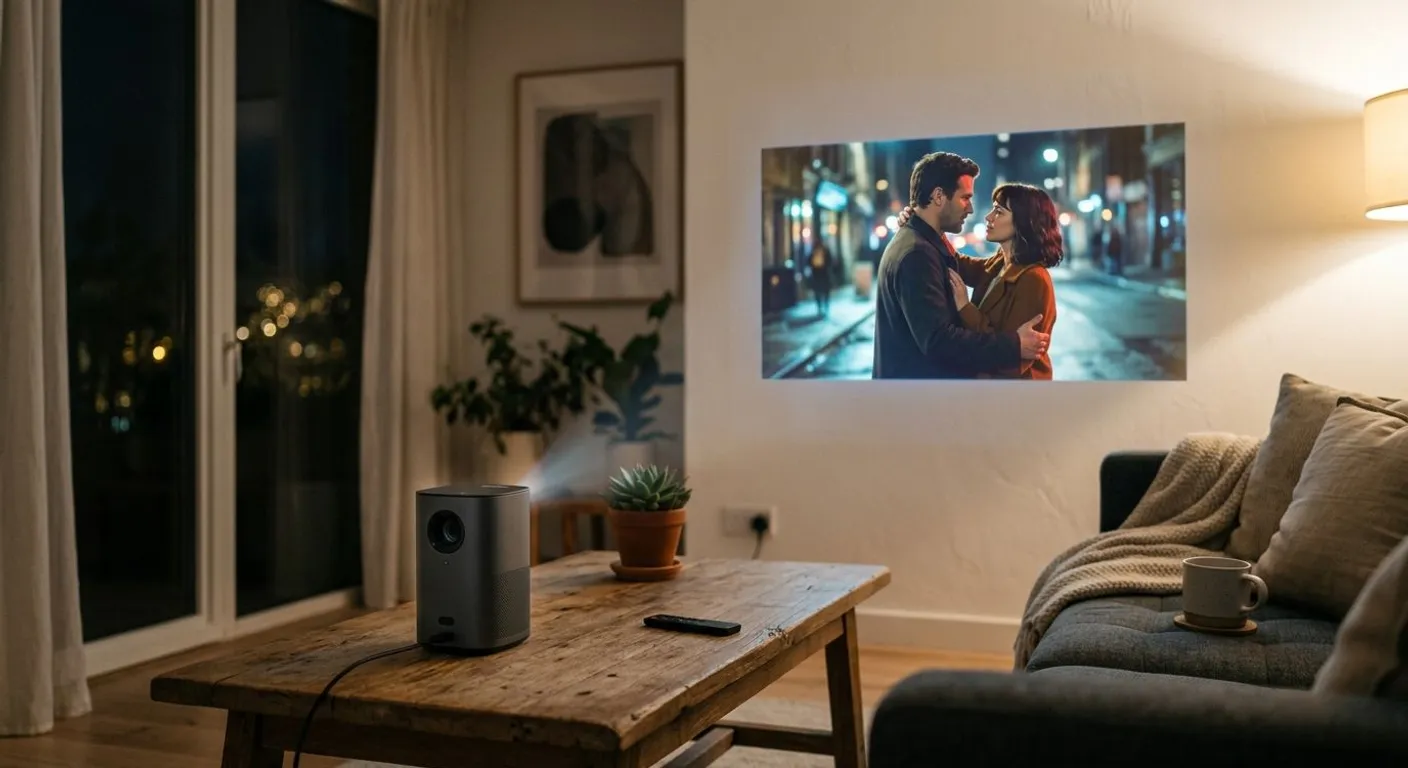
The bulky structures and complex cable setups of traditional home theater systems are giving way to minimalist tech solutions that fit in the palm of your hand. In an era where our entertainment habits have become more flexible, portable mini projectors offer the freedom to transform any surface—from living rooms to campsites, bedroom ceilings to garden walls—into a personal movie theater.
Thanks to next-generation optical engineering and advanced LED/Laser light sources, these devices—compact enough to carry in a pocket or backpack—stand out with high-resolution image quality. Equipped with smart operating systems, built-in batteries, and wireless connectivity features, you can explore the world of mini projectors to select the perfect model for your needs.
Key Advantages of Portable Mini Projectors
For users looking to break free from the fixed footprint of television screens, mini projectors offer unique advantages. The key flexibilities these devices provide include:
- High Portability: Designed roughly the size of a palm or a small box, these devices can be carried anywhere without adding extra weight to your bag.
- Built-in Smart Operating Systems: Thanks to Android TV or customized smart interfaces, they offer direct access to platforms like Netflix, YouTube, and Prime Video without needing an extra computer or media player.
- Wireless Freedom: With their built-in lithium batteries, they can provide 2 to 4 hours of uninterrupted projection during outdoor activities or camping trips where electrical outlets aren't available. If you enjoy comfortable outdoor adventures, you can support these devices with Solar Camping Accessories: Sustainable and Comfortable Adventures in Nature to meet your power needs entirely from nature.
- Automatic Setup Features: Auto-focus and auto-keystone correction detect the angle at which you place the device and adjust the image into a neat rectangle within seconds.
Technical Specifications and Selection Criteria
When purchasing a mini projector, it is essential to pay attention not just to the design, but to the actual performance behind the technical specs listed on the box. Vital parameters to consider when choosing the right device include:
Lumens vs. ANSI Lumens
The biggest misconception often created in marketing is confusing standard "Lumens" with "ANSI Lumens." While the lumen rating stated by manufacturers indicates the raw power of the light source, ANSI lumens measure the actual, clear amount of light projected onto the screen, certified by the American National Standards Institute. For a quality image in a darkened room, devices with at least 150-300 ANSI lumens are required; in dimly lit environments, models with 500 ANSI lumens or higher should be preferred.
Resolution: Native vs. Supported
Seeing "4K Supported" in a device's specs does not mean that the device delivers 4K resolution. What matters is the native resolution that the hardware actually provides. While budget-friendly models usually offer 720p (HD) native resolution, models with 1080p (Full HD) native resolution should be selected for a quality cinematic experience.
Connectivity Options and Charging Infrastructure
Modern wireless standards like Wi-Fi 6 and Bluetooth 5.0 are essential for smooth screen mirroring from a phone or tablet. Additionally, models supporting Power Delivery (PD) via a USB Type-C port allow you to charge the device using a high-capacity power bank. To learn more about evolving charging standards and battery architecture in devices, check out our article on Wireless Energy Transfer: Understanding the Home Charging Revolution.
Comparison of Display Technologies
Three primary optical technologies are used in mini projectors: DLP (Digital Light Processing), LCD, and Laser. This underlying tech determines the device's size, heat generation, and color saturation.
| Feature | DLP Technology | LCD Technology | Laser (Triple Laser) |
|---|---|---|---|
| Device Size | Very Small (Palm-sized) | Medium / Large | Small - Medium |
| Contrast Ratio | High | Medium | Very High |
| Power Consumption | Low | Medium | Low |
| Color Accuracy | Vivid and Natural | Standard | Top Tier / Professional |
| Price Segment | Mid - High | Budget-Friendly | Premium |
DLP technology is the most preferred architecture in the portable segment because its digital micromirror chips deliver the highest contrast within the smallest chassis.
Ideal Setup Tips for Home and Outdoors
To get maximum performance from your mini projector, you should apply proper setup techniques:
- Choosing the Projection Surface: A smooth, matte white wall is sufficient to start with. However, using a specialized Ambient Light Rejecting (ALR) projection screen is recommended to boost color saturation and black depth by up to 40%.
- Audio Experience: Although the built-in speakers of mini projectors are adequate for small spaces, pairing an external soundbar or portable speaker via Bluetooth is essential for an immersive atmosphere outdoors or in large living rooms.
- Distance and Throw Ratio: Pay attention to the device's throw ratio to calculate how far back it needs to be placed to reach your desired screen size. Short-throw models offer a huge advantage in tight spaces.
Advancing personal display technologies aren't limited to projectors. If you are curious about wearable alternatives that bring visuals directly in front of your eyes, check out our article titled Augmented Reality with Smart Glasses: The Future Before Your Eyes.
In conclusion, portable mini projectors eliminate dependence on fixed screens, making entertainment truly location-independent. By selecting a model with the right ANSI lumens and resolution, you can instantly transform any venue into your personal movie theater.
References
Frequently Asked Questions
How many ANSI lumens are needed for a mini projector?
While 150-300 ANSI lumens are sufficient for completely darkened rooms, devices with at least 500 ANSI lumens or higher should be preferred for a clear image in dim or ambient-lit environments.
Can a mini projector project onto a wall without a screen?
Yes, a smooth, matte, light-colored (white or light gray) wall can be used for projection. However, a projection screen significantly enhances color vibrancy and contrast.
How do you mirror a phone screen to a mini projector?
You can wirelessly mirror your screen to projectors running Android TV or smart operating systems via Wi-Fi using protocols like AirPlay, Miracast, or Chromecast.
Can a mini projector be used outdoors during the day?
It is not possible to get a clear image from mini projectors under direct sunlight. For outdoor use, it is best to wait until dusk or choose a well-shaded area.
This content was researched and prepared by the İlgi Alanları editorial team and reviewed for accuracy and readability before publication. Information on health, finance and investment topics is general in nature and does not replace professional advice.