Birdwatching Guide: Beginner Tips for the City and Nature
Learn how to start birdwatching in city parks or untouched nature—one of the most effective ways to rediscover nature and unwind your mind.
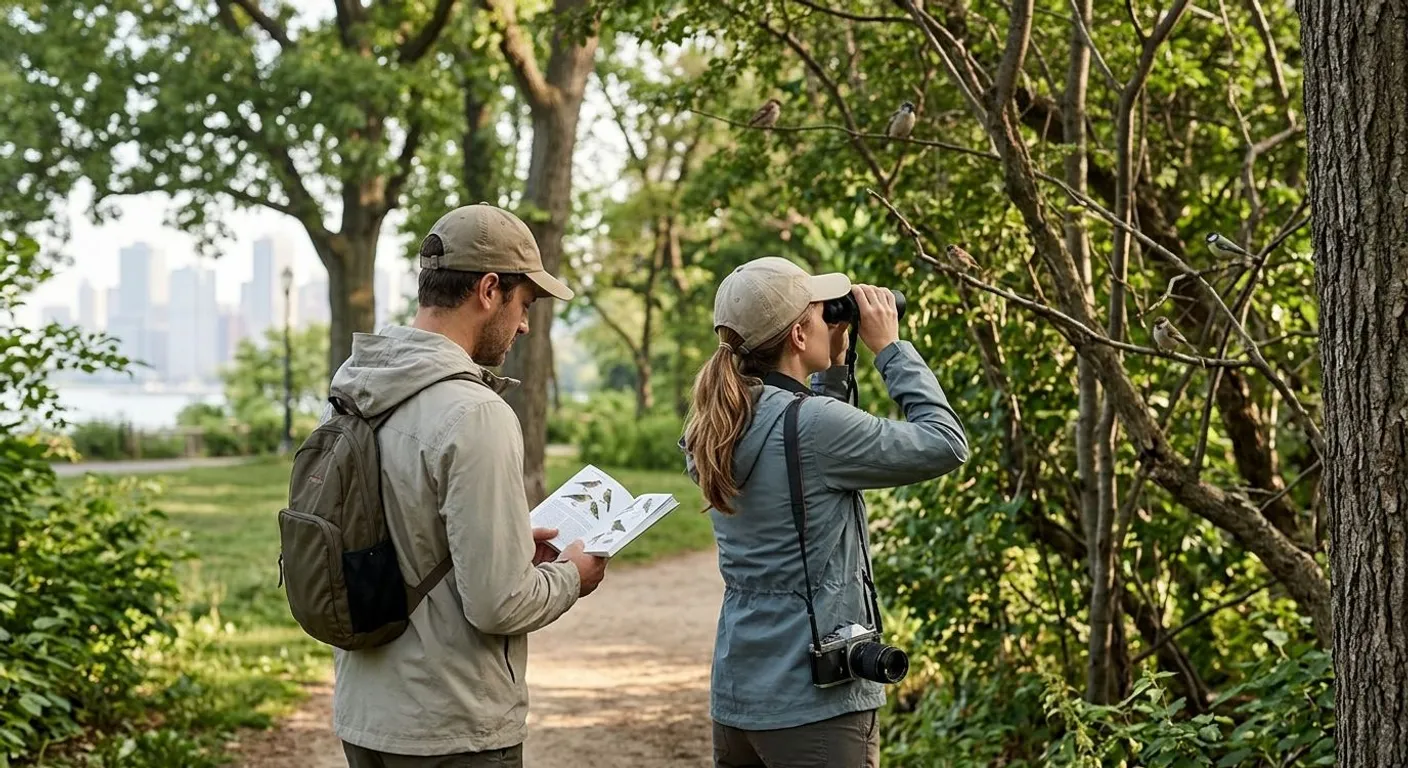
The moment you start noticing the wildlife around you, the stress of daily life gives way to a deep sense of discovery. Birdwatching (ornithology enthusiasm) is one of the most accessible hobbies, requiring no special laboratory or high-budget equipment, allowing you to tune directly into the rhythm of nature. Whether you are in a city park in the middle of a metropolis or in an untouched forest, observing the inhabitants of the sky and tree branches completely changes your perspective on the world.
In this guide, we cover in detail the essential techniques, gear choices, and bird identification methods you will need to start birdwatching from scratch.
First Step into Birdwatching: Opening Your Senses
Birdwatching is not just about spotting a species and ticking it off a list. The true skill lies in developing your ability to distinguish the sounds and movements around you. The biggest mistake made in the beginning stages is trying to search directly for rare species. However, studying the most common species around you (sparrows, crows, pigeons, blackbirds) allows you to understand the logic of species identification.
When starting birdwatching, you should develop these three basic sensory and attentional approaches:
- Visual Focus: Instead of sweeping your eyes across a broad landscape in nature, focus on the sudden twitching of leaves or movements between branches.
- Auditory Awareness: A large portion of birds reveal their presence through their sounds before being seen. Listening to songs and call notes accounts for more than 50% of birding.
- Silhouette and Size Comparison: When you see a bird, pay attention to its body structure, beak shape, and tail length before its color.
Urban Birdwatching: Discovering City Wildlife
You don't need to leave the city or organize weekly camping trips to become a birdwatcher. Cities house rich feeding grounds for resident species and stopover points along migration routes. Urban parks, cemeteries, botanical gardens, and even large residential gardens play host to unexpected species.
Preferring early morning hours when birding in the city provides a huge advantage. Before human traffic and vehicle noise pick up, birds actively feed and sing. Urban ponds and water bodies act as magnet spots for mallards, herons, and moorhens.
Additionally, maintaining your physical fitness during long city outings and park walks is important. To stay on your feet for long hours and maintain a brisk pace, you can benefit from building fitness through walking techniques.
Birdwatching in Nature: Routes and Field Conditions
Birdwatching in natural areas offers the opportunity to encounter far more diverse species thanks to habitat variety. Forests, wetlands, steppes, and mountainous regions each harbor their own unique bird communities.
Wetlands (lakes, lagoons, estuaries) are ecosystems with the highest bird density and species diversity. Shorebirds, waterfowl, and raptors can easily be observed in these areas. In forested areas, seeing birds can be difficult due to dense canopy cover; therefore, using your ears and tracking treecreepers or woodpeckers climbing tree bark yields more productive results during forest observations.
Carrying minimal weight when walking long distances in the field increases your mobility. At this point, applying the principles of the art of traveling light for a practical preparation process significantly improves your comfort in nature.
Gear Selection: Binoculars and Field Guides
The most essential tool of birdwatching is a pair of binoculars. Choosing the wrong binoculars can strain your eyes or produce a dull image, making identification difficult.
Things to Consider When Choosing Binoculars
Markings such as 8x42 or 10x42 on binoculars indicate the magnification power and lens diameter. The most ideal option for beginner level is the 8x42 size. Binoculars with 8x magnification offer both a wide field of view and minimize hand shake, making it easier to track fast-moving birds.
- 8x Magnification: Provides a wide angle, ideal for tracking active songbirds.
- 42 mm Lens: Gathers sufficient light to deliver a clear image in shaded areas such as inside forests.
- Waterproofing and Anti-Fog: Important for long-lasting use under outdoor conditions.
Digital Guides and Mobile Apps
Traditional printed field guides contain illustrations and distribution maps of birds. However, today smartphone applications have significantly simplified birdwatching. The eBird app allows birders worldwide to keep records and track which birds have been seen in which areas. Merlin Bird ID, on the other hand, offers great convenience to beginner birders by predicting species from an uploaded bird photo or recorded bird call.
Comparison of Urban and Nature Birdwatching
The table below summarizes the key differences between birdwatching processes in urban and natural environments:
| Parameter | Urban Birdwatching | Birdwatching in Nature |
|---|---|---|
| Accessibility | Very high (Parks, gardens) | Medium - Low (Requires travel and planning) |
| Visibility | Birds are used to humans, can get close | Birds are skittish, followed from a distance |
| Species Diversity | Limited and adapted species | Very high and habitat-specific species |
| Required Gear | Lightweight binoculars or naked eye | Binoculars, spotting scope, outdoor clothing |
| Ideal Time | Early morning hours | Dawn and sunset |
Steps to Identifying Bird Species
When you encounter an unknown bird, you need to quickly make a mental note. Focus on these four basic characteristics before the bird flies away:
- Size and Shape: Is the bird the size of a sparrow, a pigeon, or a crow? Is its beak short and thick (seed-eater) or long and pointed (insectivore/piscivore)?
- Primary Colors and Patterns: Is there a stripe on the head? Are there distinct color bands on its wings? Is its chest spotted or plain?
- Behavior: Is the bird climbing vertically up a tree trunk, hopping on the ground to feed, or hovering in the air to hunt?
- Call/Song: Is the sound it makes a short, sharp call or a melodic, rhythmic song?
Rules of Ethical Birdwatching
The golden rule of birdwatching is to prioritize the safety of the bird and its habitat above all else. Behaviors that cause stress to birds for the sake of photographing them or seeing them up close must be avoided.
- Do Not Approach Nests: Approaching nests too closely during the breeding season may cause parents to abandon the nest or draw predators' attention to it.
- Limit the Use of Artificial Sounds: Playing bird calls from a speaker (playback) to attract birds causes them to waste valuable energy, especially during the breeding season.
- Protect the Natural Environment: Take care not to step off designated trails and never leave trash behind during field observations.
Birdwatching is a lifelong hobby that rewards patience and careful observation. Once you begin listening to nature's quiet melodies, you will discover that the world around you is far more colorful and vibrant than you ever imagined.
Resources
Frequently Asked Questions
Are expensive binoculars necessary to start birdwatching?
No, they are not necessary. An entry-level 8x42 or 8x32 pair of binoculars that offers a clear image is completely sufficient for beginners.
What is the best time of day for birdwatching?
The most productive time of day is dawn and the early morning hours. Birds are highly active feeding and singing intensely during these hours.
What should I do to learn bird calls?
You can start recording bird sounds and analyzing them with apps like Merlin Bird ID. Additionally, hearing the sound in nature and visually verifying the bird accelerates learning.
This content was researched and prepared by the İlgi Alanları editorial team and reviewed for accuracy and readability before publication. Information on health, finance and investment topics is general in nature and does not replace professional advice.