How AI Accelerates Drug Discovery: A New Era in Biotechnology
Traditionally taking over 10 years and costing billions of dollars, the drug development process is radically changing thanks to artificial intelligence algorithms.

Photo: Tara Winstead / Pexels
Throughout history, the medical world experienced its greatest loss of time in discovering new molecules while battling diseases. While it takes an average of 10 to 15 years for a new drug to move from the laboratory to pharmacy shelves, budgets spent on this process often reach billions of dollars. Moreover, out of thousands of potential compounds synthesized and tested, only one could be deemed safe and approved. The integration of artificial intelligence and deep learning technologies into biomedical research is completely breaking this inefficient trial-and-error cycle.
Computational biology and machine learning models have become researchers' most powerful allies at a time when biological data has reached immense proportions. Digitally simulating molecular structures, resolving the mechanisms of disease-causing proteins in seconds, and designing targeted drug candidates are no longer a dream.
Bottlenecks of Traditional Drug Discovery
The classical drug development approach relies heavily on wet lab experiments. Scientists first identify a biological target (usually a protein or receptor) that causes a disease. Then, to find a suitable small molecule capable of neutralizing this target or altering its function, they test hundreds of thousands of compounds one by one.
The primary challenges at this stage include:
- Massive Search Space: The estimated number of possible molecules that could be used as drugs in the chemical universe is around $10^{60}$. Manually searching for the right molecule in this infinite ocean is no different from finding a needle in a haystack.
- High Failure Rate: The vast majority of molecules that appear successful in the laboratory exhibit unexpected toxic effects or fail to enter cells when introduced into living organisms.
- High Cost: Years of testing, the use of laboratory animals, and complex lab equipment escalate the financial burden to unsustainable levels.
How Is AI Included in the Process?
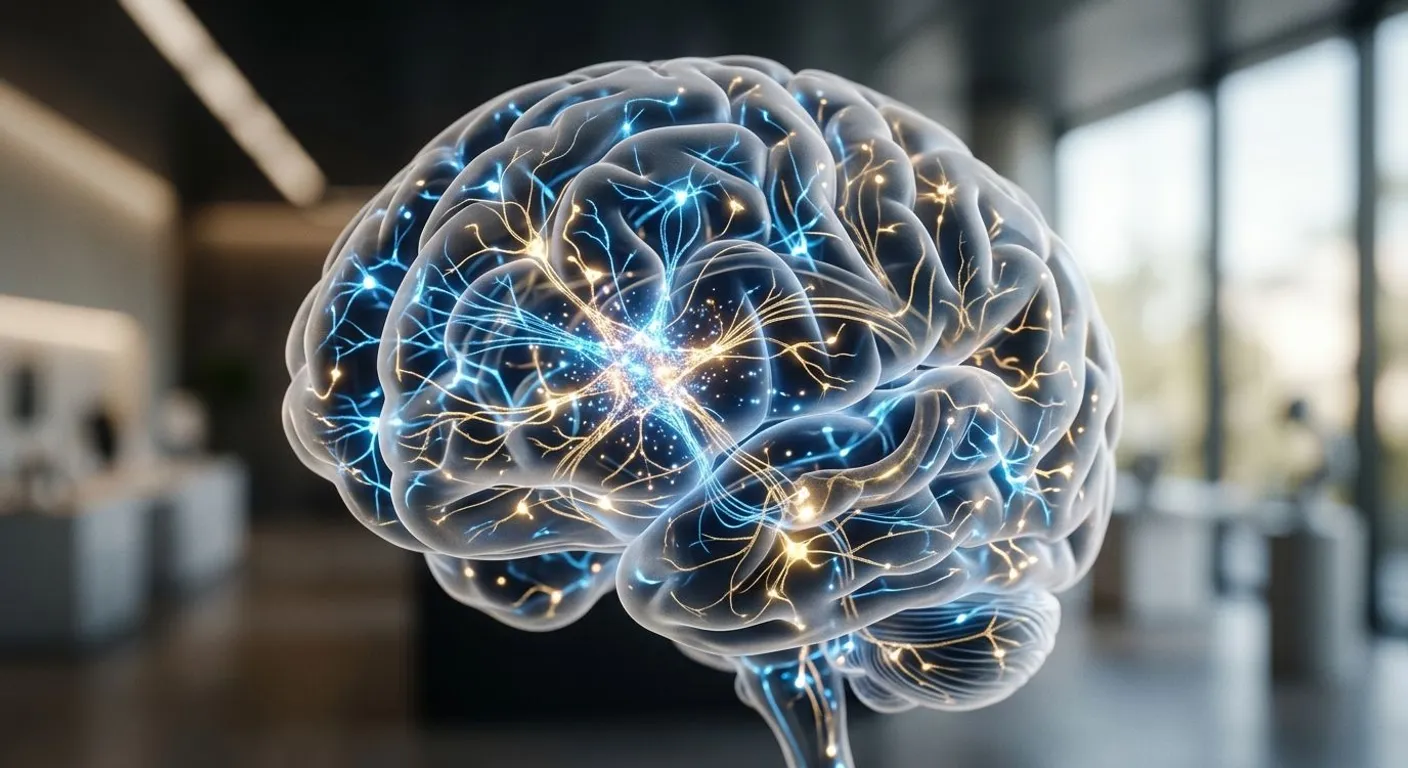
Artificial intelligence algorithms process molecular biology data by converting them into data sequences. Advanced graph neural networks (GNN) and generative AI models represent bonds between atoms and interactions in three-dimensional space as mathematical vectors.
In this way, a chemical reaction or protein-ligand binding experiment that would take days in a physical laboratory can be simulated in digital environments (in silico) at the microsecond level.
Unraveling Protein Structures
One of the biggest breakthroughs in drug discovery is the accurate prediction of three-dimensional protein structures. Proteins are formed by amino acid chains folding into complex shapes, and this folding pattern determines the protein's function. AI-powered biological modeling tools have succeeded in predicting the 3D structures of proteins from their amino acid sequences with atomic precision. Knowing how a drug molecule will lock into a protein is the first requirement for designing the right drug.
De Novo Molecule Design
While traditional methods are limited to screening existing molecular libraries, AI can design new molecules from scratch (de novo design). Generative AI models construct novel chemical structures with desired biological properties, targeted solubility levels, and low toxicity. Thus, instead of merely searching for what already exists, molecules tailored directly to the specific need are built from scratch.
4 Critical Stages Accelerated by the Process
AI integration delivers time and cost savings at every step of the drug development pipeline:
- Target Identification: Rapid identification of faulty genes and proteins causing cancer or neurological diseases by scanning omics (genomics, proteomics) data.
- Virtual Screening and Lead Compound Discovery: Testing the binding affinity of billions of molecules to the target protein in a computer environment and ranking the most promising candidates.
- ADME-T Predictions: A molecule's absorption, distribution, metabolism, excretion, and toxicity in the body are predicted using algorithms before it is even synthesized.
- Clinical Trial Optimization: Analyzing which patient cohorts might respond better to the drug during the clinical testing phase via biomarkers, thereby accelerating the trial process.
Particularly in personalized medicine applications, modern cellular delivery systems are utilized when designing target-specific molecules. At this point, combining delivery systems that create a revolution in healthcare with nanotechnology with AI-designed molecules facilitates the direct delivery of the drug to diseased tissue.
Comparison: Traditional vs. AI-Assisted Approach
To clarify this transformation taking place in the biotechnology world, let us examine the fundamental differences between the two methods:
| Process Stage | Traditional Drug Discovery | AI-Assisted Discovery |
|---|---|---|
| Target & Molecule Identification | 4 - 6 Years | 1 - 2 Years |
| Screened Molecule Capacity | Tens of thousands (wet lab) | Billions (virtual simulation) |
| Early-Stage Failure Risk | Over 90% | Significantly reduced |
| Development Cost | $1.5 - $2.5 Billion | 40% to 60% lower |
| Molecule Structure | Existing library structures | Novel & target-specific (De novo) |
Interaction with Other Areas of Biomedical Innovation
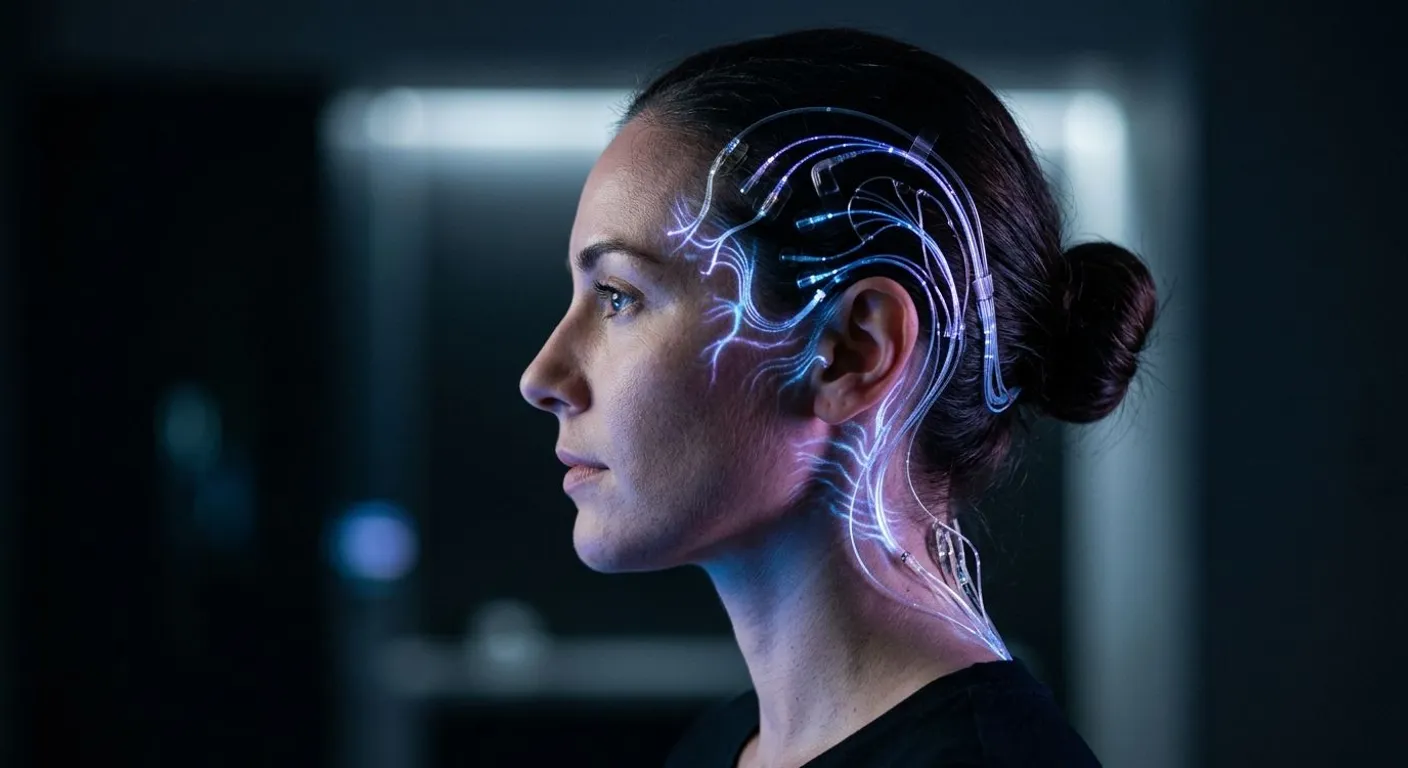
AI's success in drug discovery is not an isolated development. Advanced medical technologies reinforce each other across a broad spectrum ranging from neurological diseases to rare genetic disorders. For instance, neuronal data obtained thanks to the potential of brain-computer interfaces in brain mapping and treating neurological diseases are processed with AI models and directly used in developing central nervous system drugs.
Similarly, next-generation targeted agents at the cellular level enable biological tissue regeneration while being conducted in integration with synthetic biology research.
Ethical Questions, Data Quality, and the Future
Although the AI-driven medical revolution offers immense promises, it faces several obstacles. The biggest issue is data quality and bias. Algorithms are only as smart as the biological data on which they are trained. If the training dataset lacks population diversity or contains incomplete laboratory results, the model may draw flawed conclusions.
Another critical topic is intellectual property rights. Who will hold the patent for a molecule designed entirely by an artificial intelligence algorithm? The researching scientist, the company developing the software, or the algorithmic model itself? Regulatory authorities continue working to formulate answers to these questions.
Despite all these challenges, the first drug candidates developed thanks to AI algorithms are currently being tested in human clinical phase trials. In the coming years, we will witness personalized solutions being developed in much shorter timeframes for thousands of rare and untreatable diseases.
References
Frequently Asked Questions
Does artificial intelligence develop drugs completely on its own?
No. AI simulates molecular designs, protein interactions, and toxicity; however, the synthesis of designed molecules, laboratory testing, and clinical phase trials are carried out under the supervision of expert scientists.
How much does AI shorten drug development time?
Target identification and lead molecule discovery, which traditionally take 4–6 years, drop to 1–2 years with AI. Years can be saved in total development time.
Are AI-designed drugs safe?
Yes. All AI-designed drug candidates must undergo all safety, toxicity, and clinical trial stages mandated by regulatory agencies (such as FDA, EMA) before being tested on humans.
What does de novo molecule design mean?
De novo design is the process in which AI constructs entirely new chemical structures from scratch specifically tailored for a target disease, rather than copying existing molecules from nature or libraries.
This content was researched and prepared by the İlgi Alanları editorial team and reviewed for accuracy and readability before publication. Information on health, finance and investment topics is general in nature and does not replace professional advice.