Model Aircraft and Drone Building: Getting Started as a Hobby and Tips
Model aircraft and drone building is a fascinating hobby that combines engineering, design, and manual skills. This guide provides the information you need to build your own aerial vehicle from scratch.
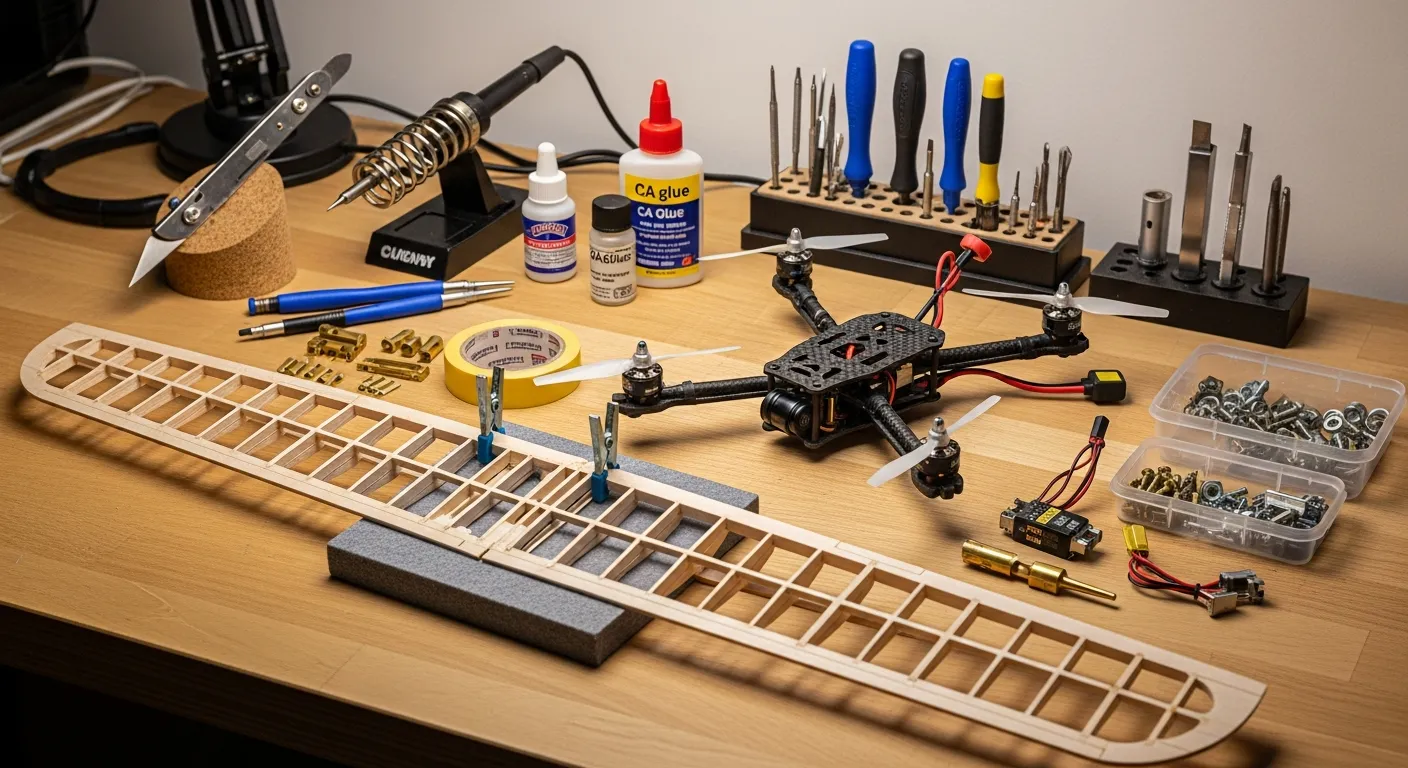
The satisfaction of building something with your own hands and then watching it soar through the sky is rare. Model aircraft and drone building offers this unique experience, a hobby that requires both technical knowledge and an artistic perspective. Whether you're drawn to the elegance of traditional model aircraft or the technological capabilities of modern drones, this field promises an endless world to explore.This article aims to guide anyone looking to step into model aircraft and drone building. You'll find practical information on many topics, from choosing your initial path and necessary materials to safety precautions and advanced projects.## Introduction to Model Aircraft and Drone Building: Why This Hobby?Model aircraft and drone building goes beyond just constructing a vehicle. This hobby equips you with knowledge and skills in many different areas:* Engineering and Physics Understanding: You learn aerodynamic principles, weight distribution, propulsion systems, and flight dynamics through practical application.* Manual Dexterity and Precision: You develop crafting skills such as cutting, gluing, soldering, and assembly. Your attention to detail improves.* Problem Solving: You use your analytical thinking skills to resolve issues encountered during a model's design, construction, and flight testing.* Electronics Knowledge: Especially in drone building, you gain knowledge about electronic components such as motors, ESCs (Electronic Speed Controllers), flight control boards, and radio systems.* Creativity: You can create your own designs, modify an existing kit, or combine different materials to produce unique projects. If you're looking for a hobby that nurtures your creativity, this field might be perfect for you. Just like creating different forms with origami and paper art kits, here you can materialize your imagination.## Essential Steps for BeginnersWhile starting this hobby might seem daunting, it's a very enjoyable process when you follow the right steps.### Choosing the Right ModelFor beginners, ready-made kits are a good option. These kits include all parts and step-by-step instructions, allowing you to focus on the assembly process and learn basic techniques. For your first model, consider the following:* Simplicity: Avoid models with complex mechanisms or numerous parts.* Durability: Models made from lightweight and easily repairable materials like foam or balsa wood are ideal for initial flights and potential crashes.* Purpose: Do you want to learn to fly, or take photos/videos? Your purpose will determine the type of model you choose (plane, quadcopter, etc.).### Necessary Materials and ToolsTo begin building a basic model aircraft or drone, you'll need some essential tools:* Cutting Tools: Hobby knife, scissors, pliers.* Adhesives: Hobby-grade super glues (CA glue), epoxy, hot glue gun.* Measuring Tools: Ruler, caliper.* Soldering Kit (for Drones): Soldering iron, solder wire, soldering paste. This is an essential kit for electronic connections.* Screwdrivers and Wrenches: In various sizes.* Sandpaper: For surface finishing.* Safety Gear: Cut-resistant gloves, safety glasses (especially when soldering or cutting).For those who prioritize sustainability when choosing materials, our guide on sustainable art materials can also offer useful ideas; some principles are applicable to model building as well.## Model Aircraft Building: From Traditional to ModernModel aircraft have evolved throughout history, utilizing different materials and technologies.### Wood and Foam Models* Balsa Wood Models: A classic material in model aircraft building due to its lightness and workability. It is mostly used for gliders and free-flight models. Cutting, gluing, and sanding the parts require patience and attention.* Foam Models: Foam materials like EPS, EPP, or EPO are known for being both lightweight and impact-resistant. They are ideal for beginner-level RC (Radio-Controlled) aircraft. They typically come as CNC-cut kits, and their assembly is relatively easier.### RC Aircraft and KitsRC aircraft are models controlled by remote control, either motorized or unmotorized (glider). Kits typically include the following:* Fuselage and Wings: Pre-cut or ready-to-assemble parts.* Motor (Electric or Internal Combustion): Electric motors are more common and easier to maintain.* ESC (Electronic Speed Controller): Controls the speed of the electric motor.* Servos: Move the ailerons, rudder, and elevator.* Propeller: Provides thrust.* Radio Control System: Transmitter (controller) and receiver (on the aircraft).* Battery: The model's power source.Assembly typically involves making electronic connections, positioning servos, and correctly joining all parts. Aerodynamic balance (center of gravity - CG) is critically important.## Drone Building: A Fusion of Technology and CreativityDrones, especially multicopters, have more complex electronic systems compared to model aircraft, but their construction is also very satisfying. Drone building is generally approached with a more modular method.### Modular Drone KitsFor beginner-level drone building, ready-made drone kits are an excellent option. These kits typically include all essential components and assembly instructions:* Chassis/Frame: Usually made from carbon fiber or durable plastic.* Motors (Brushless Motors): One for each arm.* ESCs (Electronic Speed Controllers): One for each motor.* Flight Control Board: The brain of the drone, ensuring stable flight and interpreting commands.* Propellers: Appropriate size and type for the motors.* Battery: Typically Lipo (Lithium Polymer) batteries are used.* Radio Control System: Transmitter and receiver.* Optional: Camera, GPS module, FPV (First Person View) equipment.The assembly process involves attaching motors to the chassis, connecting ESCs to the motors and flight control board, and integrating the radio receiver and other sensors. Soldering skills are very beneficial at this stage.### Designing a Drone from ScratchMore experienced hobbyists might prefer to design and build their own drones from scratch. This requires selecting each component individually, checking compatibility, and performing software configuration. At this stage, 3D printers can be used to produce custom chassis parts.## Safety and Legal RegulationsSafety is always a priority when operating model aircraft and drones. Furthermore, many countries have legal regulations for drones.* Flight Zones: Avoid flying drones near people or sensitive areas (airports, military zones). Check for restricted areas designated by local aviation authorities.* Battery Safety: Lipo batteries are powerful and can be dangerous if misused. Keep them under supervision while charging and do not use damaged batteries.* Propeller Safety: Rotating propellers can cause serious injuries. When maintaining your model or installing the battery, ensure propellers are not attached or that motors cannot accidentally start.* Weight and Registration: Drones above a certain weight may need to be registered with aviation authorities (in Turkey, the Directorate General of Civil Aviation - SHGM) and the pilot may need to obtain a license. Adhering to laws is crucial for both your own safety and the safety of others.## Advanced Projects and DevelopmentOnce you've acquired the basic knowledge, you can take your hobby further:* FPV (First Person View) Systems: Add a camera to your drone and experience flying from the drone's perspective via goggles or a screen.* Autonomous Flight Systems: Enable your drone to automatically follow a specific route using GPS and other sensors.* Cargo Drones: Build drones capable of carrying small payloads.* Racing Drones: Design fast and agile drones, typically lighter and more powerful.* Large-Scale Models: Build more detailed and realistic, large-scale model aircraft.* Design and 3D Printing: Produce your own parts with 3D printers or customize existing designs.## Model Aircraft Building vs. Drone Building Comparison| Feature | Model Aircraft Building | Drone Building || :----------------- | :---------------------------------------------------- | :----------------------------------------------------------- || Focus Area | Aerodynamics, lightness, traditional flight dynamics | Electronics, software, stabilization, multi-rotor dynamics || Primary Material| Balsa, foam, wood, fiberglass | Carbon fiber, plastic, aluminum || Complexity | Mechanical assembly, balance adjustment | Electronic integration, software setup, soldering || Required Skills| Craftsmanship, carpentry, aerodynamic knowledge | Electronics knowledge, soldering, software configuration || Flight Type | Winged flight (forward thrust), gliding | Vertical takeoff/landing, hovering, agile maneuvers || Starter Kit | Generally simpler mechanics, fewer electronics | More electronic components, software-focused || Cost | Beginner level more affordable, advanced level can increase | Starter kits affordable, camera/FPV addition increases cost || Legal Regulation| Generally less restricted (depending on weight) | Generally stricter (weight, camera, flight zone) |Building your own aerial vehicle enhances your technical knowledge while also developing skills such as patience, problem-solving, and creativity. This hobby connects you with the sky, offering opportunities to learn and explore with each new project. Remember, even the best masters were once beginners; the important thing is to take the first step and dive into this exciting world.
Frequently Asked Questions
What is a suitable age to start model aircraft and drone building?
This hobby can be started from ages 10-12 onwards, with adult supervision. There is no upper age limit; it is suitable for people of all ages.
Is it easier to build a model aircraft or a drone?
Beginner-level simple model aircraft kits can often be easier to assemble as they typically involve less electronics. Drones can be slightly more complex due to electronic and software configuration.
Which materials are best for model building?
Balsa wood and foam (EPS, EPP, EPO) are popular for model aircraft. For drones, carbon fiber frames offer lightness and durability.
Are there legal requirements for flying drones in Turkey?
Yes, for unmanned aerial vehicles (UAVs) over 500 grams, registration with the Directorate General of Civil Aviation (SHGM) and obtaining a pilot license in certain situations are mandatory. It is important to check local regulations.
How long does it take to complete my first model?
A simple model aircraft kit can be completed within a few hours, while more complex kits or building a drone from scratch might take several days or weeks.
This content was researched and prepared by the İlgi Alanları editorial team and reviewed for accuracy and readability before publication. Information on health, finance and investment topics is general in nature and does not replace professional advice.