Budget Management with Personal Finance Apps: Take Control of Your Spending
If you're looking for modern solutions to improve your financial health and manage your budget effectively, personal finance apps are among the most powerful tools. This guide will help you track your spending and reach your financial goals.
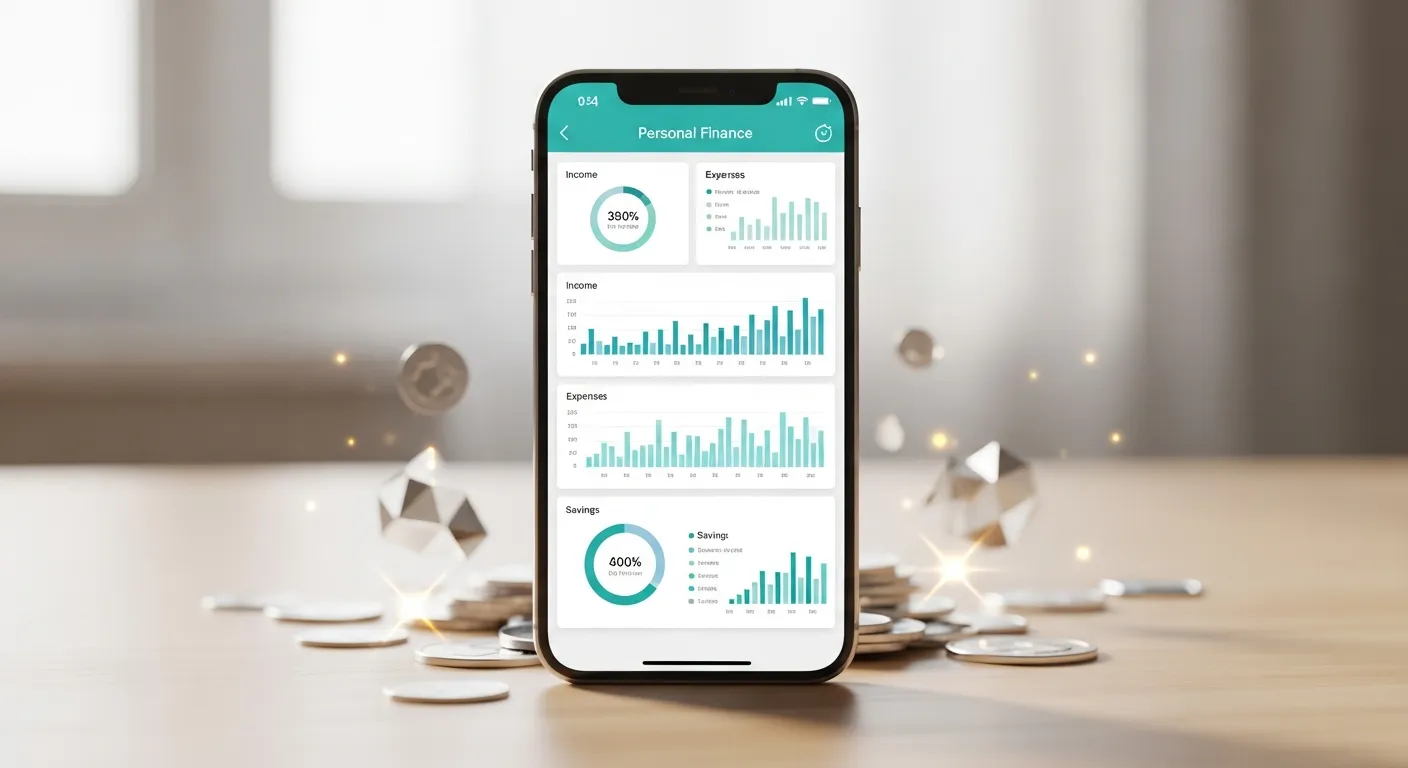
Making financial decisions can be a complex and challenging process for many of us. Tracking expenses, managing income, and saving for the future become time-consuming without the right tools. Personal finance apps simplify this process, making it easier for you to take financial control and achieve your goals. Personal finance apps are digital tools that allow you to automatically or manually track your income and expenses, categorize your spending, and manage your budget according to your set goals. These apps provide a clear view of your financial situation, helping you develop conscious spending habits and save money. Choosing the right app and effectively utilizing its features are crucial for successful budget management.
Why Are Personal Finance Apps Important?
Financial management is more than just tracking numbers; it's about changing habits and being disciplined. Apps offer several advantages in this process:
- Spending Awareness: Seeing where every penny goes allows you to identify unnecessary expenses and make cuts. Conscious spending is the first step towards saving.
- Budgeting Ease: Budgeting with traditional methods can be difficult. Apps simplify this process with predefined budget templates or customizable categories. By matching your income and expenses, they ensure you don't exceed your financial limits.
- Goal Setting and Tracking: You can set financial goals such as saving for a down payment on a house, retirement, or a vacation. Apps help you visually track your progress towards these goals, boosting your motivation.
- Automatic Tracking and Reporting: Many apps connect to your bank accounts and credit cards, automatically pulling and categorizing your expenses. This saves you time by eliminating manual data entry. Detailed reports and graphs allow you to easily analyze your financial health.
- Debt Management: Tracking your debts and creating payment plans is a critical step on the path to financial freedom. Apps help you list your debts, see interest rates, and remind you of payment due dates.
Choosing the Right App: What to Consider?
Hundreds of personal finance apps are available on the market. To choose the one that best suits your needs, you should consider certain criteria:
- Ease of Use and Interface: The app's design should be intuitive, avoid complex menus, and allow you to easily view your financial information. A simple and clear interface helps you develop the habit of regular app usage.
- Bank Integration: The ability to automatically link your accounts significantly simplifies expense tracking. However, this feature also requires extra attention to data security. Ensure the app uses bank-level encryption and security protocols.
- Security and Privacy: Protecting your financial information is the top priority. Carefully review the app's data encryption methods, two-factor authentication options, and privacy policy. Ensure your data is not shared with third parties.
- Budgeting Features: Does the app support your preferred budgeting method (e.g., the 50/30/20 rule, envelope method, zero-based budgeting)? Does it offer features like category-based budgeting, setting spending limits, and overdraft alerts?
- Reporting and Analysis: Visualizing your expenses with graphs, tables, and summary reports helps you understand your financial behavior. Apps that offer analyses like spending trends, savings rates, and net worth tracking are more beneficial.
- Cost: Most apps offer free trials or basic features. More advanced features typically require a monthly or annual subscription. Choose a model that fits your budget and needs.
- Customer Support: Receiving quick and effective support for potential issues is important for the long-term use of the app.
Budgeting Methods and App Integration
Personal finance apps offer flexibility by supporting various budgeting approaches:
The 50/30/20 Rule
This method suggests allocating 50% of your monthly income to needs (rent, bills, food), 30% to wants (entertainment, dining out, hobbies), and 20% to savings and debt repayment. Many finance apps offer the ability to automatically categorize and track your budget according to this rule.
The Envelope Method
Traditionally based on the principle of dividing cash into different envelopes, apps bring this method into the digital realm. You create a virtual 'envelope' for each spending category and allocate the budget for that category there. Once the envelope is empty, you stop spending more in that category. This method is ideal for those who want strict control over their expenses.
Zero-Based Budgeting
In this method, you assign a job to every single penny of your income each month. That is, you allocate all your money until your income minus your expenses and savings totals zero. This allows you to take complete control of your spending and focus on your goals. Finance apps help you perform and track this allocation digitally.
Comparison of Different Personal Finance App Types
| Feature / App Type | Automatic Integration Focused | Manual Entry Focused | Envelope Method Focused |
|---|---|---|---|
| Bank Connection | Yes (Automatic data retrieval) | No (Completely manual) | Generally none or limited |
| Expense Tracking | Automatic and fast | Manual and detailed | Category-based, strict tracking |
| Security Concern | Higher | Lower | Low |
| Difficulty of Use | Medium (Setup phase) | High (Regular entry) | Medium (Learning the method) |
| Recommended User | Time-constrained, automation-lover | Privacy-conscious, detail-oriented | Wants to restrict spending |
| Customization | Category and report-focused | High | High (Envelope definition) |
| Pricing | Premium features usually paid | Most free, some paid | Usually paid (subscription) |
Tips for Successful Budget Management with Personal Finance Apps
Downloading an app is just the beginning. To get the maximum benefit from the app, follow these tips:
- Regular Usage: Check the app daily or weekly. If you're doing manual entry, make sure to input your expenses daily. Even with automatic integration, ensure categories are correctly matched.
- Set Realistic Budgets: Instead of setting overly strict budgets initially, analyze your spending habits and set achievable goals. You can optimize your budget over time.
- Define Categories Correctly: Categorizing your expenses accurately and meaningfully allows you to see your financial situation clearly. Don't hesitate to create your own categories when needed.
- Analyze Your Spending Habits: Regularly review the reports and graphs provided by the app. Discover where you overspend, where you can cut back, or your potential for savings.
- Create an Emergency Fund: Building an emergency fund for unexpected situations is critical for your financial security. Apps help you track how much you've allocated to this fund.
- Manage Debts: List your debts through the app, create payment plans, and develop strategies to regularly reduce your debts. Prioritizing high-interest debts is generally a wise approach.
- Update Financial Goals: As your life changes, your financial goals may also change. Regularly update these goals in your app and track your progress.
Personal finance apps are a powerful way to increase your financial literacy and gain full control over your money. By choosing the right tools and using them diligently, you can achieve your financial goals and build a more secure future.
Frequently Asked Questions
Are personal finance apps secure?
Security depends on the encryption technologies, two-factor authentication options, and privacy policy used by the app you choose. It's important to opt for reputable apps with strong security measures.
Which personal finance app is right for me?
It depends on your needs. Do you want automatic tracking, or do you prefer manual entry? Which budgeting method do you want to use? You should compare the features of different apps to choose the one that best suits you.
Are personal finance apps free?
Many apps offer basic features for free, but typically charge a subscription fee for advanced features like enhanced reporting, bank integration, or specialized budgeting tools.
How should I start budgeting with apps?
First, enter all your income and expenses into the app. Then, create your budget using a popular method like the 50/30/20 rule or your own defined categories, and regularly track your spending.
Should I link my bank accounts to the app?
Linking bank accounts allows for automatic expense tracking and saves time. However, if you have concerns about data security, you might prefer apps that support manual entry.
This content was researched and prepared by the İlgi Alanları editorial team and reviewed for accuracy and readability before publication. Information on health, finance and investment topics is general in nature and does not replace professional advice.