Guide to Saving Money on a Small Budget in Inflationary Times
Saving money during periods of rapidly rising prices may seem impossible. With the right strategies, no matter how small your budget is, you can build a disciplined saving habit.
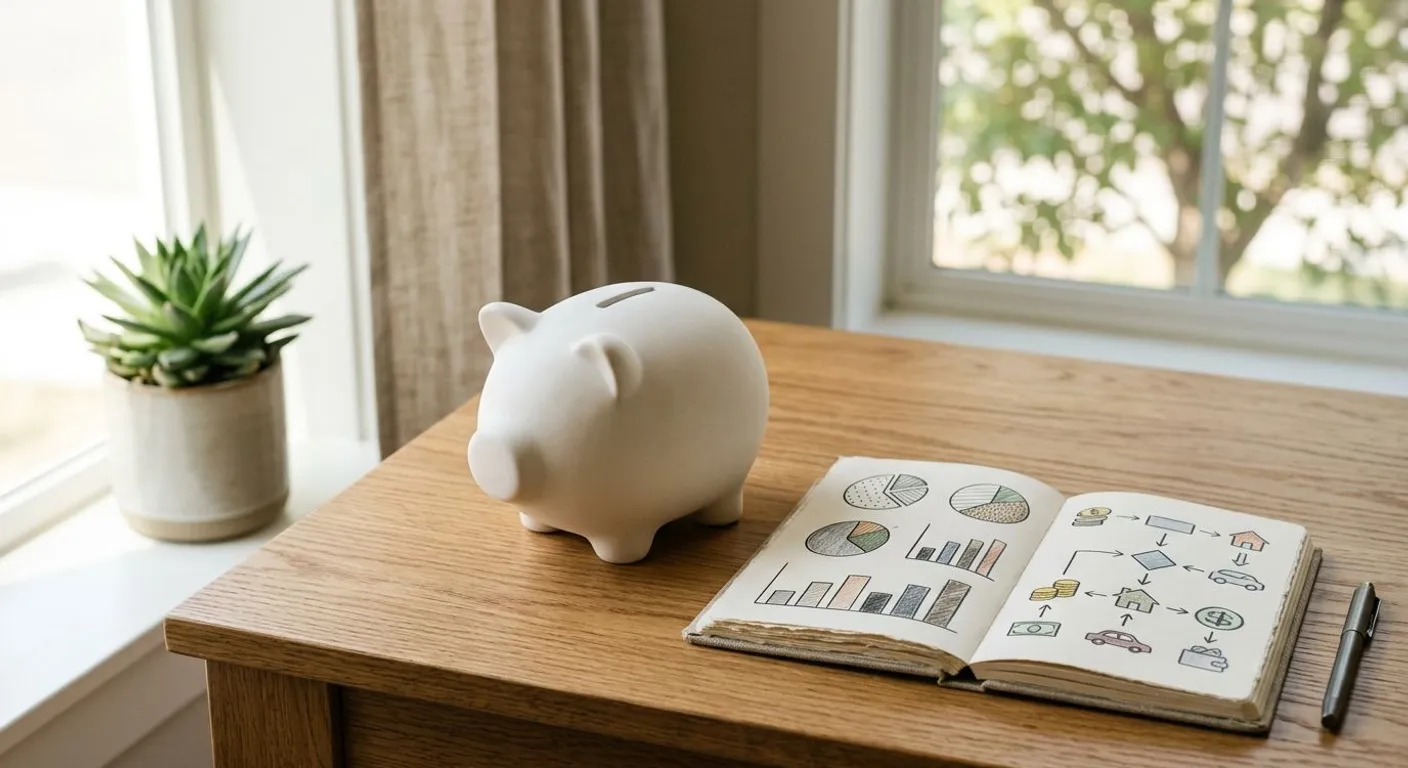
In periods of high inflation, as the purchasing power of income erodes, saving money may be perceived by many as an impossible goal. However, the foundation of building financial resilience lies not in how much you earn, but in how disciplined you are in managing what you earn. No matter how tight your budget is, it is possible to build a sustainable saving habit through the right strategies and a mindset shift.
In this guide, we will examine step by step how you can save with small amounts in economic conditions with rapid price increases, how to preserve the value of your money, and how to manage this process psychologically.
The Psychological Dimension of Saving in High Inflation
The biggest obstacle faced during inflationary periods is psychological. The mindset of "money loses value anyway, spending it makes more sense" drives individuals toward unnecessary consumption. However, saving money is not merely accumulating cash; it is building self-discipline and future security.
Starting with small amounts breaks the perception of "insufficiency" in the mind. A small amount set aside each month turns into a substantial savings pool over time through the power of compound returns and a sense of financial control. At this point, what you should focus on is not the size of the figure you save, but never failing to perform the act of setting that money aside, no matter what.
Micro-Saving Methods and Automatic Systems
If your budget is limited, setting huge goals can lead to a loss of motivation. Instead, applying micro-saving strategies that will not strain your life is more realistic.
1. The "Pay Yourself First" Principle
Usually, the biggest mistake made is trying to save whatever money is left at the end of the month. In an inflationary environment, there is usually nothing left at the end of the month. The moment your salary or income hits your account, transfer a fixed or percentage-based amount to your savings account via automatic order. When planning your income, you can easily categorize your budget by utilizing practical models such as the 50/30/20 budget rule.
2. Expense Rounding (Change Jar Mindset)
Activate the "round up transactions" feature offered by banking applications. For example, when you make a purchase of 85 TL, the amount is rounded up to 90 TL, and the 5 TL difference is automatically transferred to your savings account. Without noticing, a significant amount accumulates by the end of the month.
3. Analyzing Only Fixed Expenses
Reviewing fixed expenses yields faster results than focusing on variable expenses. Cutting costs such as unused digital subscriptions, unnecessary bank fees, and inefficient energy use creates a clear resource added directly to your savings budget. Thanks to methods to reduce daily expenses that you can apply in everyday life, you can open up extra space in your budget every month.
Strategies to Protect Savings Against Inflation
Holding deposits or cash in an inflationary environment causes purchasing power to erode. Therefore, even small accumulated amounts must be directed into vehicles that will not lose value.
In the table below, you can examine the general characteristics of saving/investment vehicles suitable for small budgets:
| Investment Instrument | Liquidity Status | Risk Level | Inflation Protection | Suitable Budget Scale |
|---|---|---|---|---|
| Money Market Funds | Very High (Daily) | Low | Medium | Very Small (Even 1 TL) |
| Gram / Quarter Gold | High | Medium | High | Medium (Irregular/Monthly) |
| Equity Funds (TEFAS) | High (T+2 or T+3) | High | High (Long Term) | Small / Medium |
| FX-Protected Accounts | Medium | Low / Medium | Medium | Medium |
The Power of Mutual Funds (TEFAS)
The easiest way to partner in professional portfolios with small amounts is to buy mutual funds through TEFAS (Turkish Electronic Fund Trading Platform). Through your banking app, you can purchase gold funds, equity funds, or money market funds even with very small amounts like 10 TL or 50 TL. This prevents your money from losing value against inflation while allowing you to diversify.
Budget Discipline Against Consumer Craze
Expectations of price increases in inflationary environments can lead to panic buying. However, buying a product you don't need by thinking "it will price up anyway" undermines your saving habit. Ask yourself these questions before making a purchase:
- Is this a need or an instant desire?
- If I postpone this purchase for 48 hours, will I still want to buy it?
- How much will the burden of this purchase deviate me from my savings goal?
Adopting a minimalist lifestyle and simplifying consumption patterns is the strongest step that can be taken toward financial freedom. Seeing budget management not as a restriction, but as an opportunity opening the door to simple living and financial freedom, will completely shift your perspective.
Conclusion and Action Plan
Saving on a small budget during inflation is not a process that yields results overnight. What matters is taking the first step today regardless of the amount and automating this action. Small but consistent steps build the solidest financial shield to keep you safe against economic fluctuations.
Resources
Frequently Asked Questions
Is it sensible to save money during inflation?
Yes, but it is extremely sensible provided that instead of keeping savings solely in cash, you evaluate them in mutual funds, gold, or money market instruments that protect their value against inflation.
Can you save money with very small amounts (e.g., 50 TL)?
Yes. Through the TEFAS platform, you can buy mutual funds even with very small amounts like 10 TL or 50 TL. What matters is discipline and consistency.
Where should I start when saving money?
As a first step, review your fixed expenses, cut unnecessary spending, and automatically transfer even a small amount to your savings account as soon as you receive your income.
This content was researched and prepared by the İlgi Alanları editorial team and reviewed for accuracy and readability before publication. Information on health, finance and investment topics is general in nature and does not replace professional advice.